WS2812B Addressable RGB LED Strip 1m 300 LEDs, Individually Programmable Digital 5050 LEDs, 5V Data Line Control, High-Density Flexible Strip for Arduino ESP32 Raspberry Pi
Overview This WS2812B addressable RGB LED strip is a high-density 1 meter lighting solution built with 300 digital 5050 RGB LEDs. Each LED package includes an integrated control IC, allowing every LED to be individually addressed and set to its own color and brightness.
1x WS2812B 1m 300-LED addressable RGB LED strip
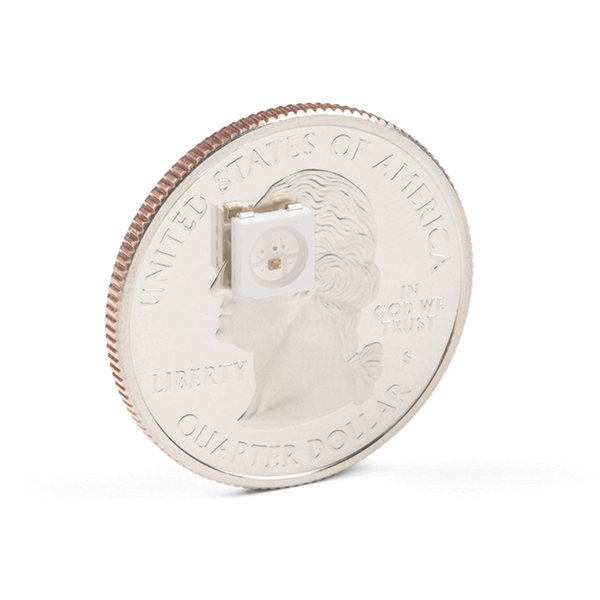
Illustrative image: SparkFun Electronics, CC BY 2.0, via Wikimedia Commons
Overview
This WS2812B addressable RGB LED strip is a high-density 1 meter lighting solution built with 300 digital 5050 RGB LEDs. Each LED package includes an integrated control IC, allowing every LED to be individually addressed and set to its own color and brightness. Unlike analog RGB strips that require separate PWM channels for each color, WS2812B strips use a single data line to stream pixel data down the chain, making complex animations, gradients, and “moving” effects possible with very simple wiring. The 300 LEDs per meter density is ideal when you need a continuous, uniform look with minimal visible spacing between pixels.
Technical Details
WS2812B LEDs typically use a one-wire, self-clocking protocol where the controller sends a continuous stream of timed pulses representing color data. Each LED reads the first 24 bits (commonly GRB order on many WS2812B variants—confirm with your strip revision or datasheet), latches that value, and forwards the remaining data to the next LED. This makes the strip naturally daisy-chainable: one microcontroller pin can control all 300 LEDs, provided the timing requirements are met.
Because the strip runs at 5V, power integrity is critical at this LED density. At full white (all channels at maximum), current draw can be substantial; actual consumption depends on brightness settings, animation patterns, LED binning, and strip revision. For reliable operation, plan for adequate 5V power capacity, use thicker power wiring, and consider power injection at multiple points along the strip to reduce voltage drop and color shift. A common best practice is to place a bulk capacitor across 5V and GND near the strip input to absorb transients, and to use a series resistor on the data line near the controller to reduce ringing (values depend on wiring length and layout; check reference designs).
Signal integrity also matters. Many controllers output 3.3V logic (e.g., ESP32, Raspberry Pi GPIO). Some WS2812B strips accept 3.3V data when powered at 5V, but this varies by module revision, wiring, and noise environment. For maximum robustness, use a proper 5V logic-level shifter or a dedicated LED data buffer when driving from 3.3V systems, especially with longer data leads.
Specifications
- LED type: WS2812B addressable RGB (integrated driver IC per LED)
- Strip length: 1 meter
- LED count: 300 LEDs total (300 LEDs/m)
- Supply voltage: 5V DC
- Control method: Single-wire digital data (DIN/DO daisy chain)
- Color depth: 24-bit per LED (8-bit per channel RGB; channel order may vary by revision—verify)
- Addressability: Individually addressable pixels (1 IC per LED)
- PCB type: Flexible strip PCB
- Cuttable: Yes (cut interval varies by strip layout/revision; check cut marks on the strip)
- Connector/wire leads: Varies by batch/revision (confirm lead length and connector type on arrival)
Applications
- High-resolution LED matrices and pixel art displays (when arranged in serpentine layouts)
- Ambient lighting, under-shelf lighting, and edge lighting where dense pixels improve uniformity
- DIY smart lighting projects with Arduino/ESP32 controllers and effects libraries
- Stage props, cosplay, wearables, and interactive installations with per-pixel animations
- Signage, channel letters, and decorative outlines requiring smooth gradients and chases
- Prototyping addressable lighting for robotics, dashboards, and status indicators
Integration Notes
- Power planning: Size the 5V supply for your maximum expected brightness and pattern. Full-brightness white is the worst case; many projects run at reduced brightness for lower heat and power.
- Power injection: At 300 LEDs/m, inject 5V and GND at multiple points if you observe dimming or color shift toward the far end.
- Ground reference: Always connect controller ground to strip ground to ensure reliable data signaling.
- Data line conditioning: Consider a small series resistor near the controller output and keep the data wire short; use twisted pair or shielded cable in noisy environments.
- Level shifting: If using 3.3V GPIO, a 5V logic shifter is recommended for consistent operation (results vary by strip revision and wiring).
- Software: Use WS2812/NeoPixel-compatible libraries. Confirm pixel color order (often GRB) and set the correct order in code.
Included Components
1x WS2812B 1m 300-LED addressable RGB LED strip
Illustrative image: SparkFun Electronics, CC BY 2.0, via Wikimedia Commons
No reviews for this component yet.
Related Components