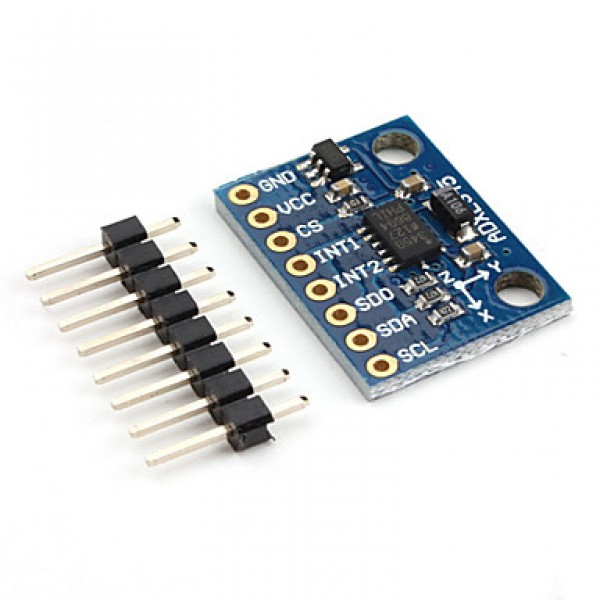
Water Level Sensor Module for Arduino, 3V–5V Liquid Level Detection Board, Analog Output Water Leak/Level Detector, Conductive Water Sensor for Tanks, Hydroponics, Pumps & DIY Electronics
The Water Level Sensor Module is a simple and effective liquid detection board designed for Arduino and common microcontroller projects. It uses exposed conductive sensing tracks to detect the presence and relative level of water (and other conductive liquids).
The Water Level Sensor Module is a simple and effective liquid detection board designed for Arduino and common microcontroller projects. It uses exposed conductive sensing tracks to detect the presence and relative level of water (and other conductive liquids). As the liquid rises and covers more of the sensing area, the module outputs a higher analog signal—making it easy to estimate water level or trigger leak detection alerts.
This sensor is widely used in DIY systems such as water tank monitoring, hydroponics reservoirs, pump automation, overflow protection, and leak alarms. Because it outputs an analog voltage, you can set custom thresholds in code to decide when to turn a pump on/off, sound a buzzer, or send a notification.
How It Works
The sensor has parallel copper traces that act like electrodes. When water touches the traces, it creates a conductive path. The more area that is covered, the stronger the sensed conductivity, producing a proportional analog output that your microcontroller can read using an ADC pin.
Key Features & Benefits
- Analog Level Sensing: Provides a variable output for approximate level measurement (not just ON/OFF)
- Wide Voltage Range: Works from 3V to 5V DC for common boards
- Fast Response: Detects water contact quickly for leak/overflow alarms
- Simple Wiring: 3-pin interface (Signal, VCC, GND)
- Compact & Breadboard-Friendly: Easy to integrate into prototypes and enclosures
- Flexible Use: Suitable for tanks, trays, reservoirs, and pipelines (with proper mounting)
Wiring / Pinout (Typical)
| Pin | Meaning | Connect To |
|---|---|---|
| S | Signal (Analog Out) | Arduino/ESP32 ADC pin |
| + | VCC | 3V–5V |
| - | GND | Ground |
Typical Specifications
| Item | Details |
|---|---|
| Sensor Type | Conductive water level / leak sensor |
| Operating Voltage | 3V–5V DC |
| Output Type | Analog output (voltage varies with level/contact) |
| Interface | 3-pin (S, +, -) |
| Detects | Water and other conductive liquids |
| Use Cases | Tank level, hydroponics, leak alarm, pump control |
Notes:
- This sensor is best for water/leak detection and approximate level sensing, not precision measurement.
- Long exposure to water (especially mineral/dirty water) can cause corrosion on copper traces. For longer life, use it intermittently, keep it clean, or consider a corrosion-resistant probe style sensor.
Example Applications
- Water tank level indicator (low/medium/high thresholds)
- Hydroponics reservoir monitoring
- Sump pump/overflow protection
- Leak detection under sinks or near AC drain lines
- Automatic pump control using a relay module
No reviews for this component yet.
Related Components