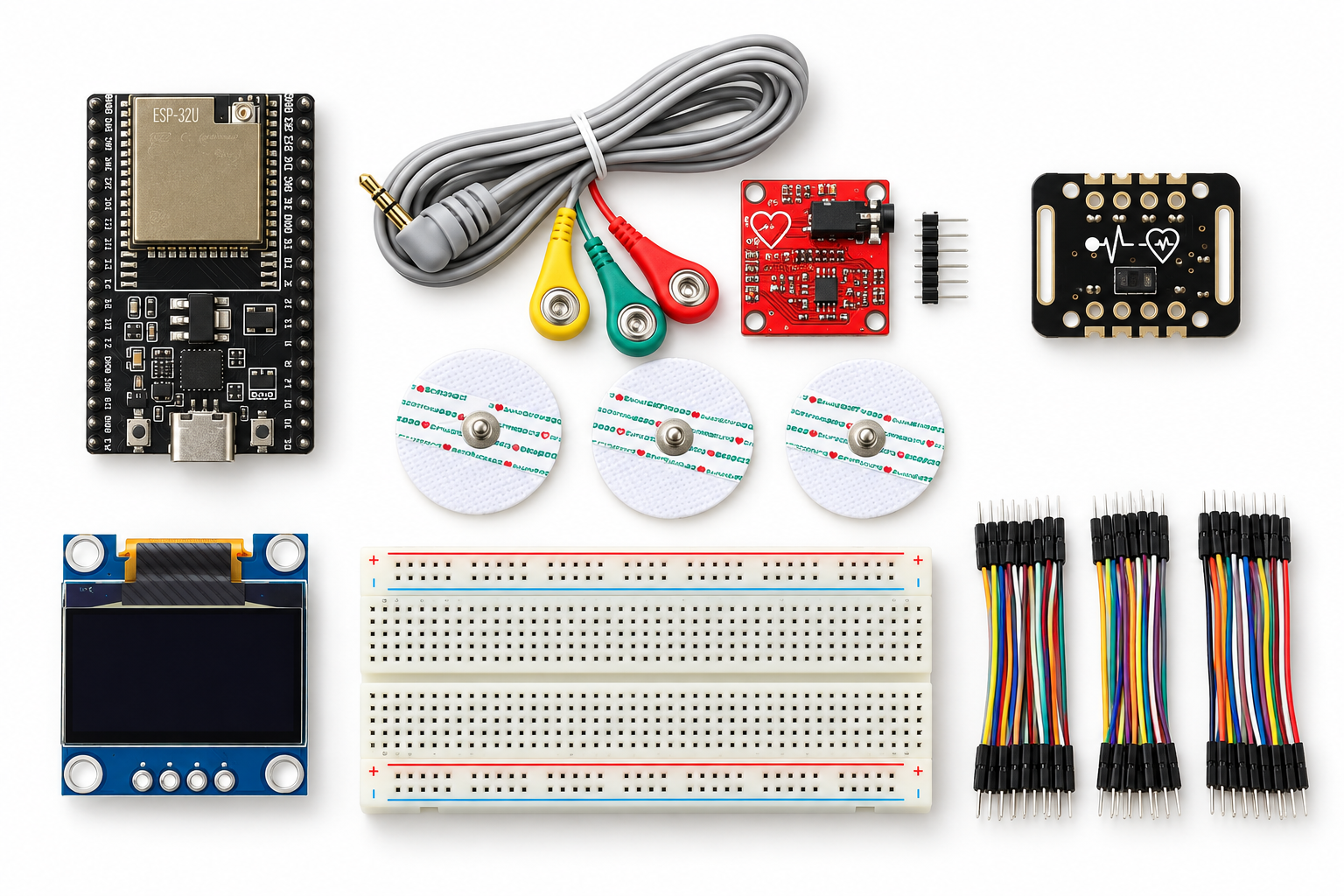
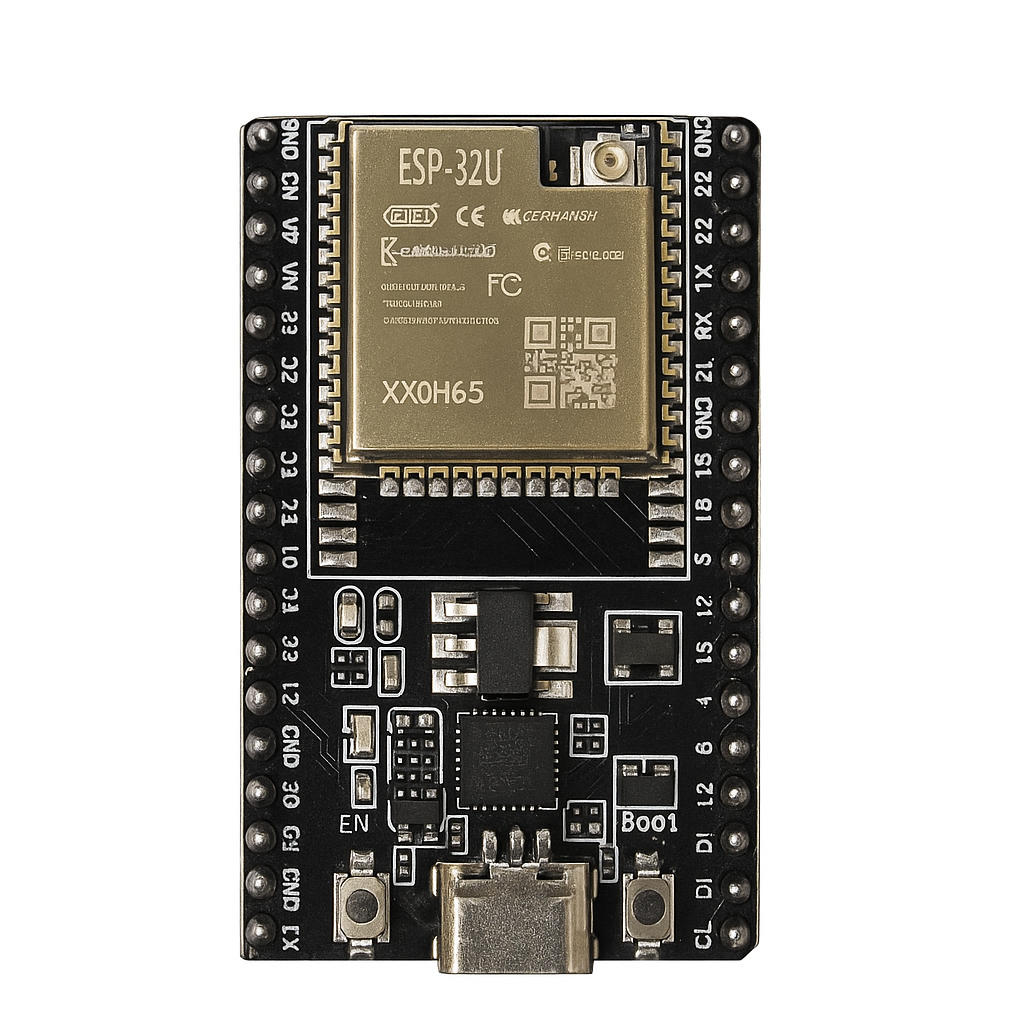
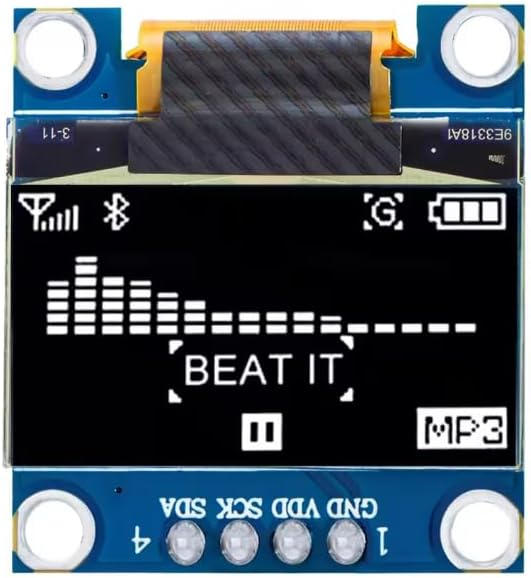
Explore ECG signal acquisition, optical pulse sensing, experimental BPM estimation and OLED display projects using ESP32U, AD8232 and MAX30102. Includes a full-size 830 tie-point breadboard and complimentary USB-A to USB-C data cable. Education only, not a medical device. Project outlines require verified wiring and tested firmware.
◈
Difficulty
Intermediate
◎
Build time
2-4 hours
◇
Parts included
6 components
▦
Build guide
7 steps
// Components
Included parts (6)
6 parts packed in this kit
Lost or damaged a part? Every part name below opens its own page, so you can buy a replacement or an extra on its own.
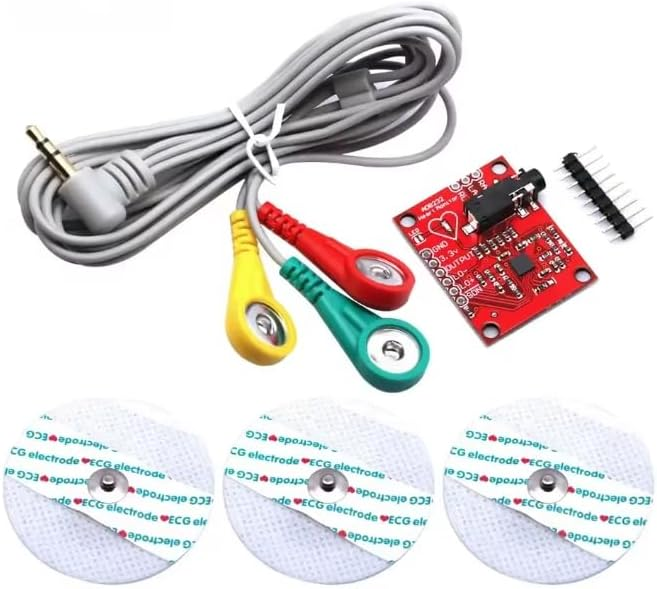
Read the AD8232 analog output with ESP32 and study sampled values. The AD8232 pack includes the three-lead cable and electrode pads. Education only, not for diagnosis or health decisions. Body-connected ECG work requires battery-only equipment disconnected from chargers, mains-powered peripherals and test instruments. Verified wiring and tested code are still pending.
Plot AD8232 samples in Arduino Serial Plotter with the complimentary USB-A to USB-C data cable. While electrodes are attached, run the laptop on battery only with charger, dock and other wired peripherals disconnected. Keep electrodes off the body during programming and wiring changes. Education only, not for diagnosis or health decisions. Body-connected ECG work requires battery-only equipment disconnected from chargers, mains-powered peripherals and test instruments. Verified wiring and tested code are still pending.
Read the AD8232 leads-off outputs and report an electrode-connection warning instead of displaying a misleading signal. Connection status is not health status. Education only, not for diagnosis or health decisions. Body-connected ECG work requires battery-only equipment disconnected from chargers, mains-powered peripherals and test instruments. Verified wiring and tested code are still pending.
Explore peak detection and approximate BPM calculation. Compare with recorded example signals and discuss motion artefacts and false peaks. Education only, not for diagnosis or health decisions. Body-connected ECG work requires battery-only equipment disconnected from chargers, mains-powered peripherals and test instruments. Verified wiring and tested code are still pending.
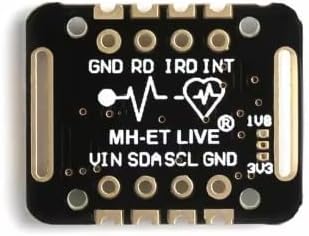
Read optical samples over I2C and inspect the PPG waveform. Place a fingertip over the actual optical sensing window, not the printed label side. Explore finger pressure and motion effects. Verify supply requirements for the supplied breakout. Educational outline; tested wiring and code pending. Not a clinical pulse oximeter.
Display an experimental optical pulse estimate and signal-quality status on the I2C OLED. Test modules separately before sharing the I2C bus. Displayed numbers are not validated heart-rate or SpO2 measurements. Educational outline; pin mapping and code require bench testing.
Acquire timestamped ECG and PPG samples and use the OLED for status. Discuss sampling and filtering delays when comparing electrical and optical signals. This is not a blood-pressure measurement method. Education only, not for diagnosis or health decisions. Body-connected ECG work requires battery-only equipment disconnected from chargers, mains-powered peripherals and test instruments. Verified wiring and tested code are still pending.
Compare raw and filtered ECG or PPG samples and observe how smoothing changes timing and peaks. Begin with recorded sample data before live sensor experiments. Education only, not for diagnosis or health decisions. Body-connected ECG work requires battery-only equipment disconnected from chargers, mains-powered peripherals and test instruments. Verified wiring and tested code are still pending.
ℹ
Pin numbers and thresholds are written for the board in this kit. Change the board and the pin map changes with it — ask and we'll adjust it.
// Before you start
What this kit teaches
Research an educational biosignal kit for learning ECG/EMG and optical pulse sensing with ESP32, aimed at university labs, biomedical students, and advanced makers.
Difficulty · Intermediate
Assumes you have built a simple circuit before and can follow a wiring guide. You will install a toolchain and upload code.
You'll also need
Computer with Arduino IDE and suitable board/library support. For body-connected ECG Serial Plotter use, a battery-oper…
Standalone battery power source for untethered experiments, disconnected from charging while electrodes are attached.
Soldering tools and adult assistance if supplied module headers are not pre-soldered.
Replacement disposable ECG electrode pads for later sessions.
Who it's for
Catalogued as suited to schools / labs.
Built around DIYKIT catalog research - high priority hardware. Classroom sets are quoted per seat — ask for a bulk price.
// Compare
How it compares
Kit
Level
Parts
Build guide
Price
This kit Biomedical Sensor & Bio-Signal Learning Kit
This kit is rated Intermediate. You should have built a simple circuit before and be comfortable with breadboard wiring. It is built around the esp32 platform.
2-4 hours. The build guide below breaks it into 7 steps.
All 6 components listed in the parts table are packed in the kit. Current availability depends on finished kit stock and component restock status.
Recorded in our catalogue as suited to schools / labs. Bulk pricing is available for classroom sets.