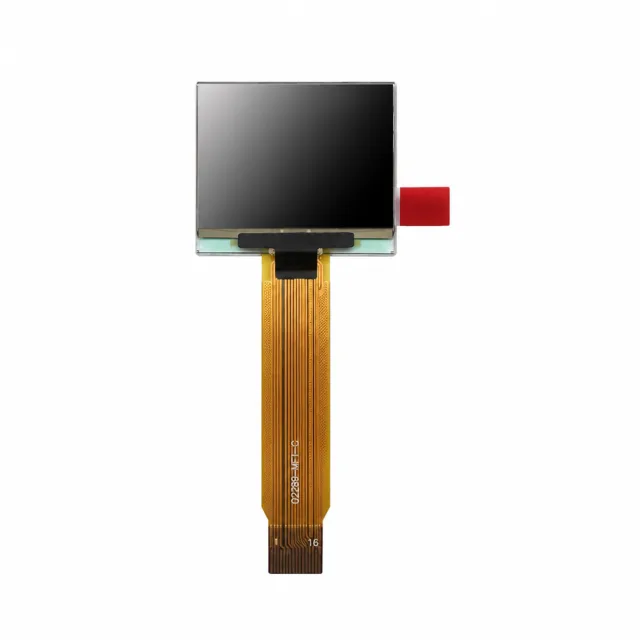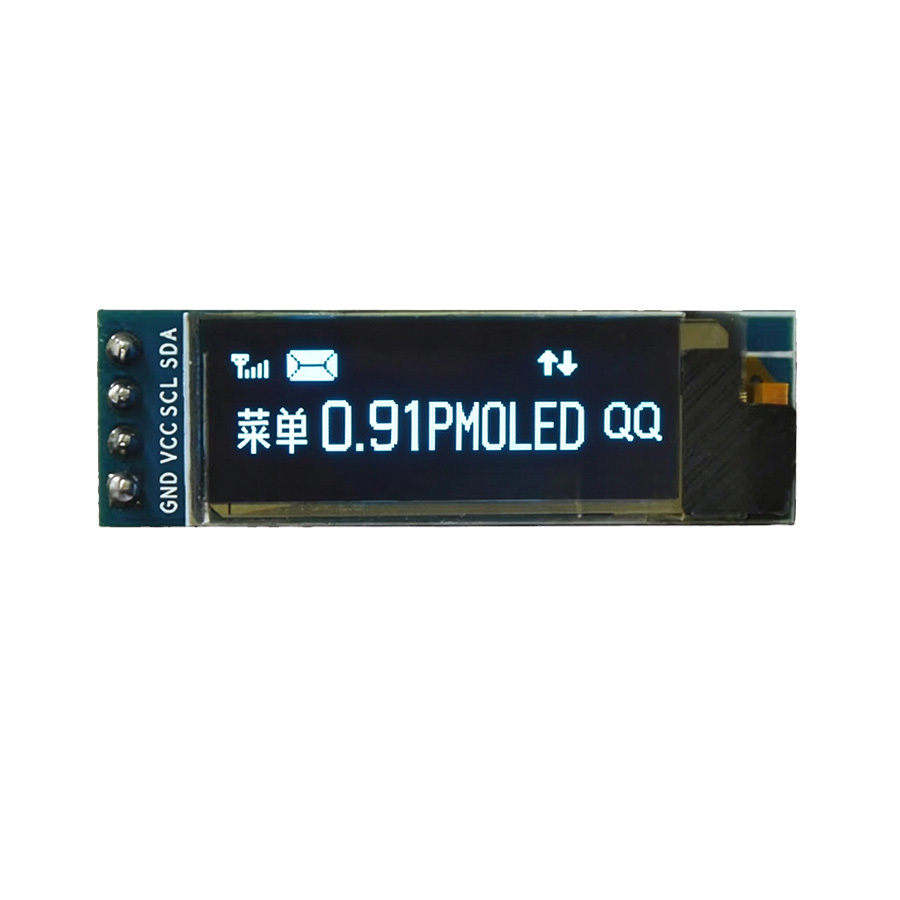
0.91 Inch OLED Display Module SSD1306 128x32 I2C IIC Serial Screen - Monochrome Blue / White, 4-Pin (GND, VCC, SCL, SDA), 3.3V/5V for Arduino, ESP32, STM32 & Raspberry Pi
plus AED 20 delivery · free over AED 100
- UAE-wide delivery, 1–2 working days · AED 20 · free on orders AED 100+
- Ships today — order by 3pm
- 7-day returns on unopened items
- SKU
- DIY-373
- Category
- Displays
- Brand / MPN
- DIYKIT
- Min. order
- 1 pc
- Barcode
- DKU-000428
Overview The 0.91 Inch OLED Display Module is a compact 128 × 32 pixel monochrome screen driven by the SSD1306 controller and connected over I2C. Each OLED pixel emits its own light, so there is no backlight: text, status icons and readings appear bright and sharp against a pure-black background, with a near-180° viewing angle and no…
Read the full description ↓Complete the build
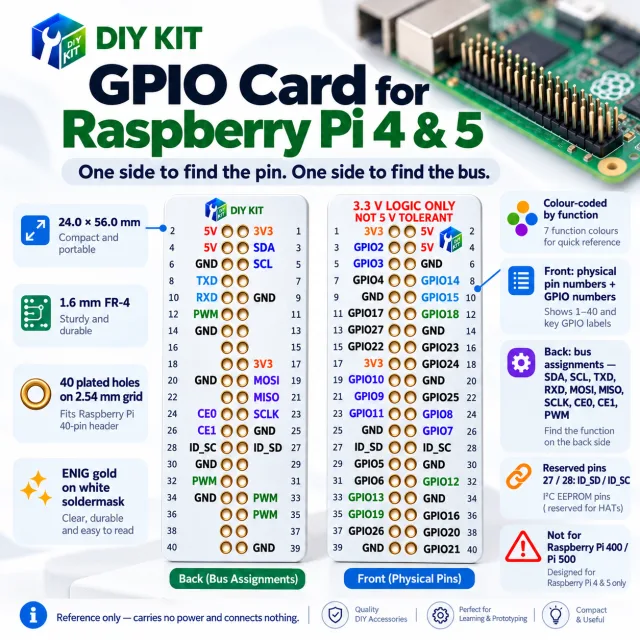
Our own DIYKIT board was made for this — plus what it is usually wired or ordered with.
1 × 0.91" 128 × 32 I2C OLED display module (SSD1306) with 4-pin header
Description
Overview
The 0.91 Inch OLED Display Module is a compact 128 × 32 pixel monochrome screen driven by the SSD1306 controller and connected over I2C. Each OLED pixel emits its own light, so there is no backlight: text, status icons and readings appear bright and sharp against a pure-black background, with a near-180° viewing angle and no whitening or colour shift from the side. The module is available in blue or white (one colour per module) and suits any project that needs a small, low-power readout: wearables, sensor nodes, handheld meters, clocks and custom controllers.
Technical Details
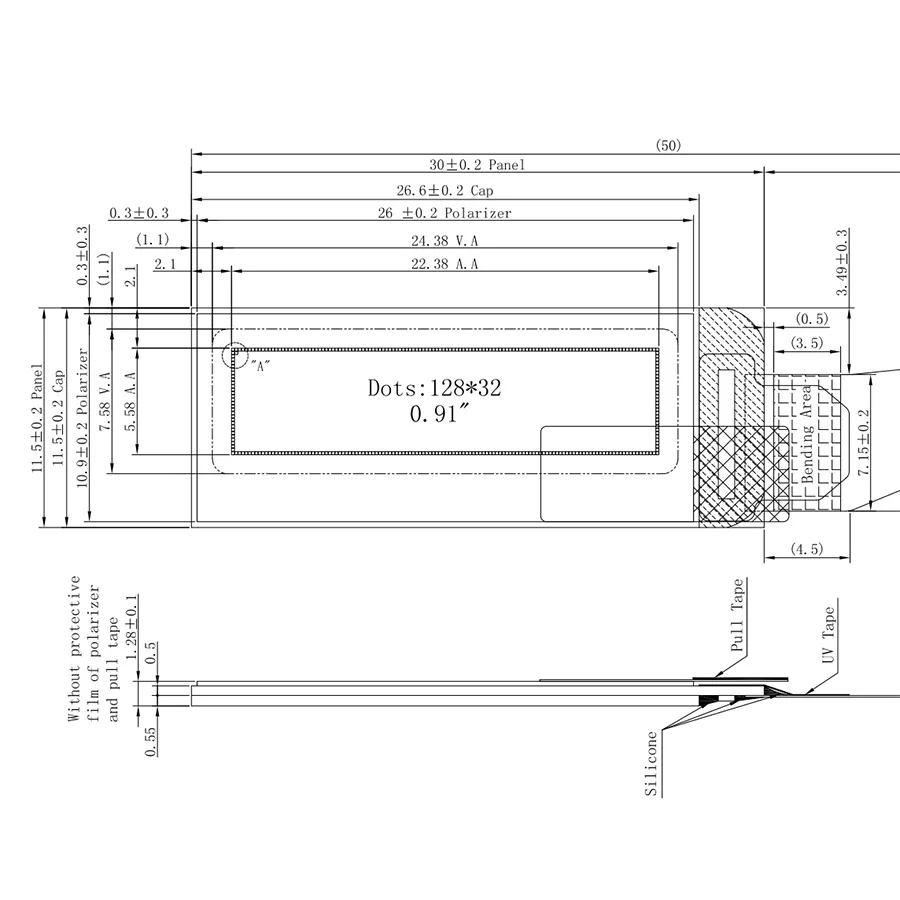
The SSD1306 driver is mounted directly on the glass (chip-on-glass) and brought out through a flexible FPC to a small PCB, keeping the module thin and easy to embed. Only four wires are needed, GND, VCC, SCL and SDA, and the I2C address is normally 0x3C. Because unlit pixels draw almost no current, static power consumption is far lower than an equivalent LCD, which extends run time on battery-powered devices and simplifies power design. With no liquid crystal inside, the OLED also performs well at low temperatures and is robust against shock and EMI.
Specifications
- Display size: 0.91 inch diagonal
- Resolution: 128 × 32 pixels
- Display type: PMOLED, monochrome, COG on FPC
- Display colour: Blue or White (single colour per module)
- Driver IC: SSD1306
- Interface: I2C / IIC serial (address 0x3C)
- Pins: 4 — GND, VCC, SCL, SDA (pre-soldered header)
- Supply voltage: 3.3 V to 5 V
- Viewing angle: near 180°
- Module size: approx. 38 × 12 mm
Applications
Wearables and fitness trackers, portable detectors and handheld meters, wireless sensor nodes, remote controls, smart-home panels, clocks, weather stations, drone telemetry readouts, custom keyboards and any compact device that needs to show the time, parameters, status icons or prompt messages.
Integration Notes
Connect GND and VCC to your board's ground and 3.3 V or 5 V rail, and SCL/SDA to the I2C pins (A5 and A4 on an Arduino UNO). Initialise the display with the Adafruit SSD1306 or U8g2 library using the 128 × 32 configuration and address 0x3C; if the screen stays blank, run an I2C scanner to confirm the address, as some batches respond on 0x3D. Keep I2C leads short on breadboards and add pull-up resistors if your board does not provide them.
Included Components
1 × 0.91" 128 × 32 I2C OLED display module (SSD1306) with 4-pin header
Specifications
No reviews yet · be the first
Sign in to review a product you have bought - or use the review link in your order email, which needs no account and marks your review as a verified purchase.
Related components