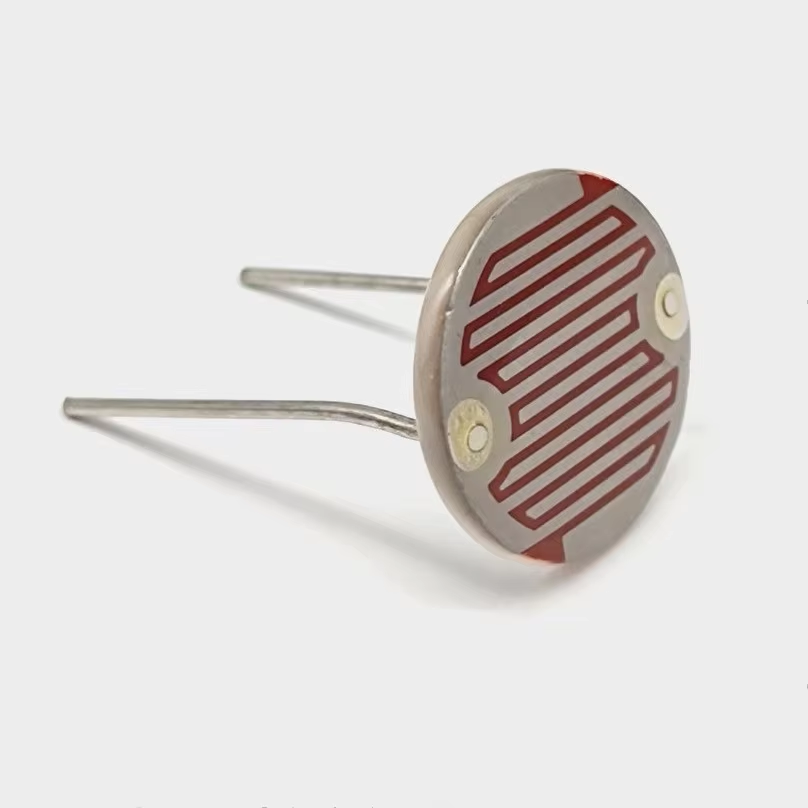
20mm LDR Photoresistor 20528 Light Dependent Resistor Sensor for Arduino, Raspberry Pi, and DIY Automatic Light Detection Circuits, CdS Photo Conductive Cell, DIYKIT DIY-259
- UAE-wide delivery, 1–2 working days once dispatched · AED 20 · free on orders AED 100+
- Out of stock — leave your email above and we tell you when it is back
- 7-day returns on unopened items
- SKU
- DIY-259
- Category
- Components
- Brand / MPN
- DIYKIT
- Min. order
- 1 pc
- Barcode
- DKU-000300
Overview The DIYKIT DIY-259 20mm 20528 LDR (Light Dependent Resistor) is a high-sensitivity, large-format photoresistor designed for precise ambient light detection in DIY electronics, robotics, and industrial automation.
Read the full description ↓Complete the build
Our own DIYKIT board was made for this — plus what it is usually wired or ordered with.
1 x DIYKIT 20mm 20528 LDR Light Dependent Resistor
Description
Overview
The DIYKIT DIY-259 20mm 20528 LDR (Light Dependent Resistor) is a high-sensitivity, large-format photoresistor designed for precise ambient light detection in DIY electronics, robotics, and industrial automation. Featuring a generous 20mm active diameter, this cadmium sulfide (CdS) photoconductive cell captures more incident light than standard smaller sensors, resulting in a more pronounced resistance change and higher signal-to-noise ratio. Whether you are building an automated street light controller, a solar panel tracking system, or an optical barrier, the 20528 LDR provides a robust, analog response to changing environmental light levels. Its simple two-pin interface makes it exceptionally easy to integrate into both microcontroller-based systems and pure analog circuits.
Technical Details
At the core of the 20528 LDR is a semiconductor track made of cadmium sulfide. When light photons strike the surface of the semiconductor, valence electrons are excited into the conduction band, significantly increasing the material's electrical conductivity. This process causes the sensor's resistance to drop dramatically. In complete darkness, the material has very few free charge carriers, resulting in a high dark resistance state. The spectral response of this CdS cell is optimized to closely match the sensitivity of the human eye, peaking in the green-to-yellow visible light spectrum. Because the resistance change is continuous and non-linear, it is highly recommended to calibrate your software or analog comparator circuit to the specific ambient lighting conditions of your environment. Please note that exact electrical characteristics, such as precise rise and fall response times, can vary by module revision; always check the datasheet for exact curves.
Specifications
- Model: 20528
- Sensor Type: Cadmium Sulfide (CdS) Photoresistor
- Active Diameter: 20mm (nominal, check datasheet for exact dimensional tolerances)
- Light Resistance: Varies by module revision (typically in the range of 10k to 50k Ohms at 10 Lux; check datasheet)
- Dark Resistance: Varies by module revision (typically minimum 1M to 5M Ohms at 0 Lux; check datasheet)
- Peak Spectral Response: Typically around 540nm to 560nm (check datasheet)
- Maximum Operating Voltage: Varies by module revision (check datasheet for maximum voltage limits)
- Power Dissipation: Varies by module revision (typically up to 100mW-200mW; check datasheet)
- Operating Temperature Range: Varies by module revision (typically -30 degrees Celsius to +70 degrees Celsius)
- Mounting Style: Through-Hole (radial leads)
Applications
The versatility of the 20mm 20528 LDR makes it suitable for a wide range of applications. In consumer electronics, it is commonly used in automatic night lights, clock backlights, and electronic toys to trigger actions when ambient light drops below a certain threshold. In robotics and renewable energy, it serves as the primary sensing element in solar trackers, allowing dual-axis or single-axis motorized mounts to align solar panels directly with the sun. It is also highly effective in security systems as a simple beam-break detector, in industrial environments for basic contrast sensing, and in educational science kits to teach students the fundamentals of optoelectronics and analog sensor integration.
Integration Notes
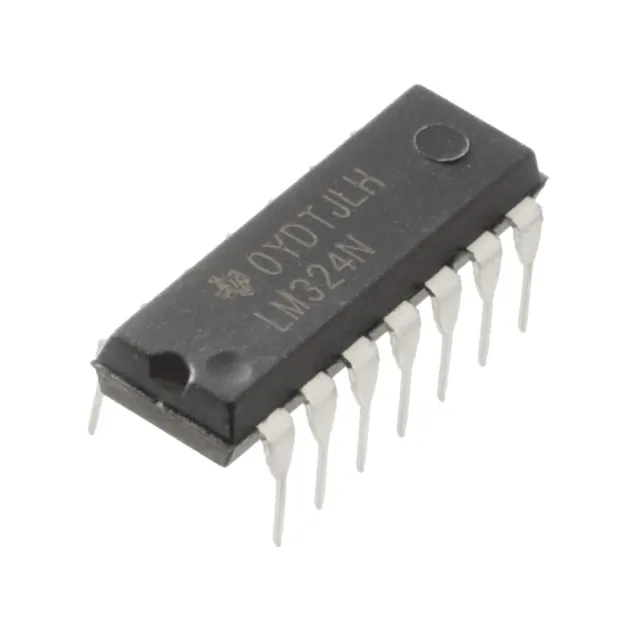
Integrating the 20528 LDR into your microcontroller project is straightforward. The most common configuration is a voltage divider circuit. Connect one lead of the LDR to your system's VCC (typically 3.3V or 5V). Connect the second lead to an analog input pin (such as A0 on an Arduino) and also to a fixed pull-down resistor (typically 10k Ohms) connected to Ground (GND). As light levels increase, the LDR's resistance drops, causing the voltage at the analog pin to rise toward VCC. In darkness, the LDR's resistance increases, pulling the analog pin voltage down toward GND. This analog voltage can then be read using an Analog-to-Digital Converter (ADC) and processed in your code to trigger relays, LEDs, or motors. For digital threshold switching without a microcontroller, the LDR can be paired with an LM393 comparator integrated circuit or a simple NPN transistor switch.
Included Components
1 x DIYKIT 20mm 20528 LDR Light Dependent Resistor
Specifications
No reviews yet · be the first
Sign in to review a product you have bought - or use the review link in your order email, which needs no account and marks your review as a verified purchase.
Related components
 In Stock
 In Stock
%22%2F%3E%3Cellipse%20cx%3D%2228%22%20cy%3D%2224%22%20rx%3D%2226%22%20ry%3D%2214%22%20fill%3D%22rgba(255%2C255%2C255%2C.18)%22%2F%3E%3Crect%20x%3D%2222%22%20y%3D%2228%22%20width%3D%2256%22%20height%3D%2250%22%20rx%3D%2212%22%20fill%3D%22url(%23b)%22%20filter%3D%22url(%23s)%22%2F%3E%3Cellipse%20cx%3D%2234%22%20cy%3D%2236%22%20rx%3D%2212%22%20ry%3D%226%22%20fill%3D%22rgba(255%2C255%2C255%2C.28)%22%20transform%3D%22rotate(-18%2034%2036)%22%2F%3E%3Crect%20x%3D%2234%22%20y%3D%2215%22%20width%3D%225%22%20height%3D%2214%22%20rx%3D%222.5%22%20fill%3D%22%236ee7b7%22%2F%3E%3Crect%20x%3D%2261%22%20y%3D%2215%22%20width%3D%225%22%20height%3D%2214%22%20rx%3D%222.5%22%20fill%3D%22%236ee7b7%22%2F%3E%3Ccircle%20cx%3D%2236.5%22%20cy%3D%2214%22%20r%3D%224%22%20fill%3D%22%23a7f3d0%22%2F%3E%3Ccircle%20cx%3D%2263.5%22%20cy%3D%2214%22%20r%3D%224%22%20fill%3D%22%23a7f3d0%22%2F%3E%3Crect%20x%3D%2228%22%20y%3D%2242%22%20width%3D%2244%22%20height%3D%2222%22%20rx%3D%226%22%20fill%3D%22%23022c22%22%2F%3E%3Cline%20x1%3D%2228%22%20y1%3D%2250%22%20x2%3D%2272%22%20y2%3D%2250%22%20stroke%3D%22%2334d399%22%20stroke-width%3D%22.8%22%20stroke-opacity%3D%22.5%22%2F%3E%3Cline%20x1%3D%2228%22%20y1%3D%2257%22%20x2%3D%2272%22%20y2%3D%2257%22%20stroke%3D%22%2334d399%22%20stroke-width%3D%22.8%22%20stroke-opacity%3D%22.5%22%2F%3E%3Cline%20x1%3D%2244%22%20y1%3D%2242%22%20x2%3D%2244%22%20y2%3D%2264%22%20stroke%3D%22%2334d399%22%20stroke-width%3D%22.8%22%20stroke-opacity%3D%22.5%22%2F%3E%3Cline%20x1%3D%2256%22%20y1%3D%2242%22%20x2%3D%2256%22%20y2%3D%2264%22%20stroke%3D%22%2334d399%22%20stroke-width%3D%22.8%22%20stroke-opacity%3D%22.5%22%2F%3E%3Ccircle%20cx%3D%2238%22%20cy%3D%2252%22%20r%3D%226%22%20fill%3D%22%2334d399%22%20opacity%3D%22.9%22%2F%3E%3Ccircle%20cx%3D%2262%22%20cy%3D%2252%22%20r%3D%226%22%20fill%3D%22%2334d399%22%20opacity%3D%22.9%22%2F%3E%3Ccircle%20cx%3D%2236.5%22%20cy%3D%2250.5%22%20r%3D%222%22%20fill%3D%22white%22%2F%3E%3Ccircle%20cx%3D%2260.5%22%20cy%3D%2250.5%22%20r%3D%222%22%20fill%3D%22white%22%2F%3E%3Cpath%20d%3D%22M36%2068%20Q50%2076%2064%2068%22%20fill%3D%22none%22%20stroke%3D%22%23022c22%22%20stroke-width%3D%222.5%22%20stroke-linecap%3D%22round%22%2F%3E%3C%2Fsvg%3E)