 Backorder
Some images are AI-generated illustrations, made to match this kit’s actual contents. Colours and small details may differ — see “In the box” and the product details for the exact parts.
ACEBOTT QE200 ESP32 Basic Starter Kit (40+ Lessons)
Free delivery on this item
- UAE-wide delivery, 1–2 working days once dispatched · AED 20 · free on orders AED 100+
- Backorder — ordered in for you, ships when it arrives
- 7-day returns on unopened items
- SKU
- DIY-272
- Category
- DIY KITS
- Brand / MPN
- ACEBOTT QE200
- Min. order
- 1 pc
- Barcode
- DKU-000314
Overview This ESP32 Basic Starter Kit is a complete, beginner-friendly learning package built around an ESP32 controller board and a structured project curriculum. It is designed for STEM classrooms, makers, and first-time learners who want to move beyond theory and build working electronic projects step-by-step.
Read the full description ↓ESP32 starter kit set with controller board, modules, wires, storage case



Description
Overview
This ESP32 Basic Starter Kit is a complete, beginner-friendly learning package built around an ESP32 controller board and a structured project curriculum. It is designed for STEM classrooms, makers, and first-time learners who want to move beyond theory and build working electronic projects step-by-step. The kit combines an ESP32 development board (with integrated Wi‑Fi and Bluetooth) plus a rich selection of sensors, input modules, and actuators so you can practice real wiring, code deployment, and troubleshooting—skills that transfer directly to real-world IoT and embedded projects.
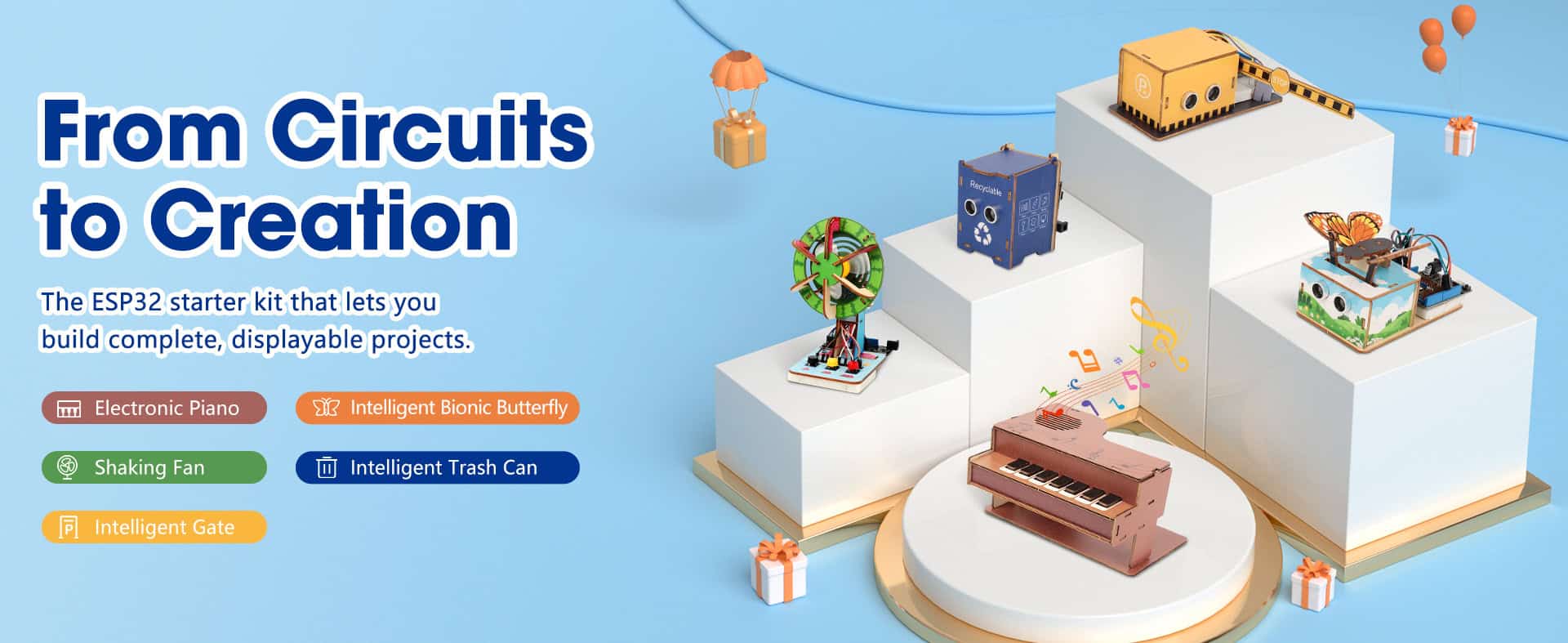
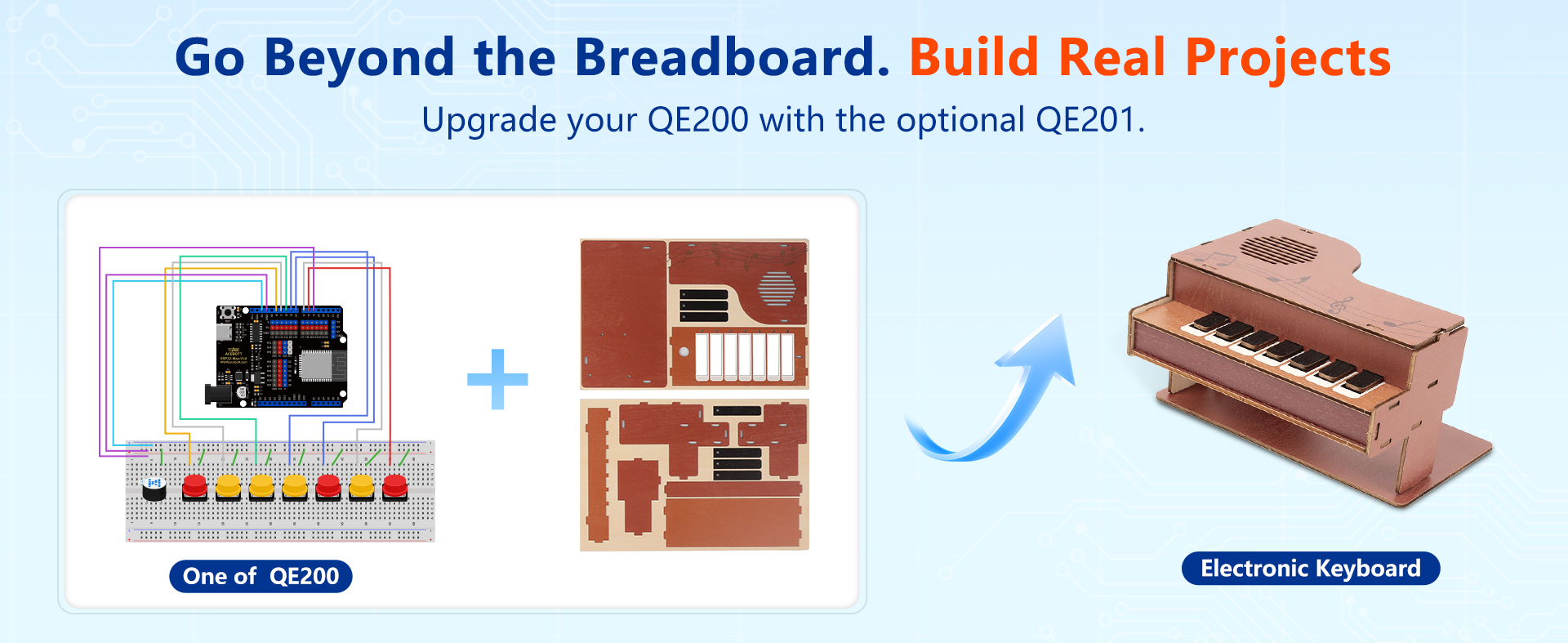
A key advantage of an ESP32-based starter kit is that you can start with simple digital I/O (LEDs, buttons, buzzers), then progress to analog sensing, PWM motor control, and finally connected applications. Many lessons focus on “see it work” outcomes—sound, motion, light, and sensor feedback—so learners quickly understand how software instructions translate into physical behavior. The kit also supports optional wooden structural assemblies (sold separately, depending on the expansion set) to turn circuits into displayable models such as bionic-style motion builds or small smart mechanisms.
Technical Details
At the core is the ESP32 microcontroller platform, widely used for IoT due to its integrated wireless connectivity and strong peripheral set. Depending on the board revision included, the ESP32 typically provides multiple GPIO pins, PWM outputs for dimming LEDs and controlling motors/servos, ADC inputs for reading analog sensors, and serial interfaces such as I2C/SPI/UART for common modules. This makes it suitable for combining multiple sensors and actuators in a single project, such as an environmental monitor that reads sensor data and triggers alarms, indicators, or motor actions.
The learning path in this kit emphasizes practical integration:
- GPIO fundamentals: digital input/output, pull-ups, debouncing, and safe current handling using resistors and driver modules where required
- Sensor reading: digital sensors (threshold or logic output) and analog sensors (voltage-based output) using ADC (resolution and usable range depend on ESP32 board revision)
- Actuator control: PWM for brightness and speed control, and driver-assisted control for motors where direct GPIO drive is not appropriate
- Communication: using common serial buses (I2C/SPI/UART) when modules require them (exact modules vary by kit batch)
Programming support is designed to meet learners where they are. Lessons may include Arduino IDE examples (C/C++), visual Blockly-style coding for beginners, and Python-based workflows where supported by the included board/firmware and lesson plan. Always follow the provided tutorial for the recommended toolchain and board settings for your specific kit revision.
Specifications
- Controller platform: ESP32 development board (exact module/variant varies by kit revision; check board marking/datasheet)
- Wireless: Wi‑Fi + Bluetooth (capability provided by ESP32; version/features vary by module revision)
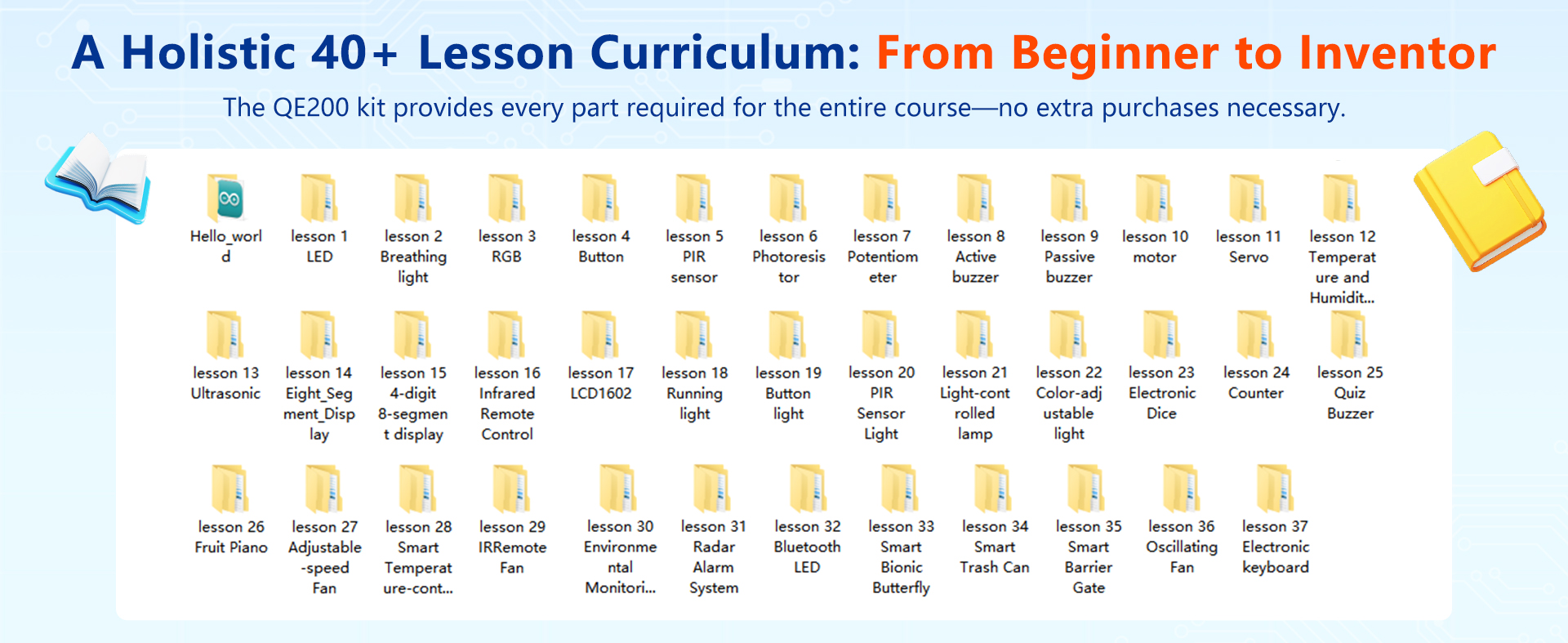
- Lesson count: 40+ systematic lessons/projects (content may vary by edition/updates)
- Tutorial languages: English and Chinese
- Supported programming approaches: Arduino IDE (C/C++), Blockly-style visual coding, Python (availability depends on lesson/firmware)
- Expansion compatibility: supports optional wooden structure/model components (sold separately; compatibility depends on expansion set)
- Typical use environment: indoor learning, prototyping, STEM labs
Note: Exact sensor list, motor types, and quantities can vary by production batch. Refer to the included packing list or tutorial index for the definitive module inventory.
Applications
- Beginner electronics training: LEDs, buttons, buzzers, and simple logic projects
- Sensor projects: basic environmental sensing, threshold alarms, and indicator systems (sensor types depend on included modules)
- Motion and interaction: small motor/servo demonstrations, fan-style builds, and mechanical triggers (requires appropriate driver modules as provided)
- IoT learning: Wi‑Fi/Bluetooth experiments such as sending readings, remote control, or smart device concepts (implementation depends on lesson plan)
- Classroom STEM curriculum: structured experiments with repeatable outcomes and progressive difficulty
Integration Notes
- Power planning: ESP32 boards are commonly powered via USB; external loads (motors/servos) may require separate power and proper grounding. Follow the lesson wiring diagrams to avoid brownouts and resets.
- Pin mapping: ESP32 GPIO capabilities vary by pin (some pins have boot/strapping behavior). Use the tutorial’s recommended pins for sensors and actuators.
- Motor safety: do not drive motors directly from GPIO. Use the included driver/transistor modules if provided and follow the wiring guide.
- Wireless projects: Wi‑Fi/Bluetooth examples may require local network credentials and compatible libraries; keep firmware and libraries aligned with the tutorial version.
Included Components
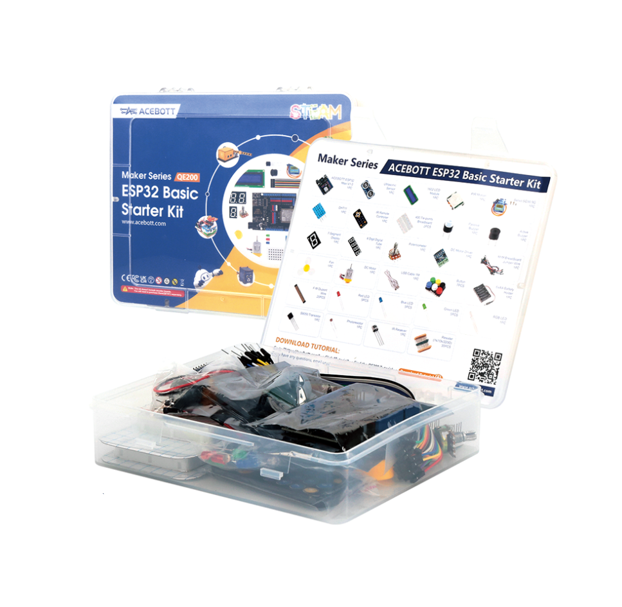
ESP32 starter kit set with controller board, modules, wires, storage case
Specifications
No reviews yet · be the first
Sign in to review a product you have bought - or use the review link in your order email, which needs no account and marks your review as a verified purchase.
Related components
%22%2F%3E%3Cellipse%20cx%3D%2228%22%20cy%3D%2224%22%20rx%3D%2226%22%20ry%3D%2214%22%20fill%3D%22rgba(255%2C255%2C255%2C.18)%22%2F%3E%3Crect%20x%3D%2222%22%20y%3D%2228%22%20width%3D%2256%22%20height%3D%2250%22%20rx%3D%2212%22%20fill%3D%22url(%23b)%22%20filter%3D%22url(%23s)%22%2F%3E%3Cellipse%20cx%3D%2234%22%20cy%3D%2236%22%20rx%3D%2212%22%20ry%3D%226%22%20fill%3D%22rgba(255%2C255%2C255%2C.28)%22%20transform%3D%22rotate(-18%2034%2036)%22%2F%3E%3Crect%20x%3D%2234%22%20y%3D%2215%22%20width%3D%225%22%20height%3D%2214%22%20rx%3D%222.5%22%20fill%3D%22%236ee7b7%22%2F%3E%3Crect%20x%3D%2261%22%20y%3D%2215%22%20width%3D%225%22%20height%3D%2214%22%20rx%3D%222.5%22%20fill%3D%22%236ee7b7%22%2F%3E%3Ccircle%20cx%3D%2236.5%22%20cy%3D%2214%22%20r%3D%224%22%20fill%3D%22%23a7f3d0%22%2F%3E%3Ccircle%20cx%3D%2263.5%22%20cy%3D%2214%22%20r%3D%224%22%20fill%3D%22%23a7f3d0%22%2F%3E%3Crect%20x%3D%2228%22%20y%3D%2242%22%20width%3D%2244%22%20height%3D%2222%22%20rx%3D%226%22%20fill%3D%22%23022c22%22%2F%3E%3Cline%20x1%3D%2228%22%20y1%3D%2250%22%20x2%3D%2272%22%20y2%3D%2250%22%20stroke%3D%22%2334d399%22%20stroke-width%3D%22.8%22%20stroke-opacity%3D%22.5%22%2F%3E%3Cline%20x1%3D%2228%22%20y1%3D%2257%22%20x2%3D%2272%22%20y2%3D%2257%22%20stroke%3D%22%2334d399%22%20stroke-width%3D%22.8%22%20stroke-opacity%3D%22.5%22%2F%3E%3Cline%20x1%3D%2244%22%20y1%3D%2242%22%20x2%3D%2244%22%20y2%3D%2264%22%20stroke%3D%22%2334d399%22%20stroke-width%3D%22.8%22%20stroke-opacity%3D%22.5%22%2F%3E%3Cline%20x1%3D%2256%22%20y1%3D%2242%22%20x2%3D%2256%22%20y2%3D%2264%22%20stroke%3D%22%2334d399%22%20stroke-width%3D%22.8%22%20stroke-opacity%3D%22.5%22%2F%3E%3Ccircle%20cx%3D%2238%22%20cy%3D%2252%22%20r%3D%226%22%20fill%3D%22%2334d399%22%20opacity%3D%22.9%22%2F%3E%3Ccircle%20cx%3D%2262%22%20cy%3D%2252%22%20r%3D%226%22%20fill%3D%22%2334d399%22%20opacity%3D%22.9%22%2F%3E%3Ccircle%20cx%3D%2236.5%22%20cy%3D%2250.5%22%20r%3D%222%22%20fill%3D%22white%22%2F%3E%3Ccircle%20cx%3D%2260.5%22%20cy%3D%2250.5%22%20r%3D%222%22%20fill%3D%22white%22%2F%3E%3Cpath%20d%3D%22M36%2068%20Q50%2076%2064%2068%22%20fill%3D%22none%22%20stroke%3D%22%23022c22%22%20stroke-width%3D%222.5%22%20stroke-linecap%3D%22round%22%2F%3E%3C%2Fsvg%3E)