Overview
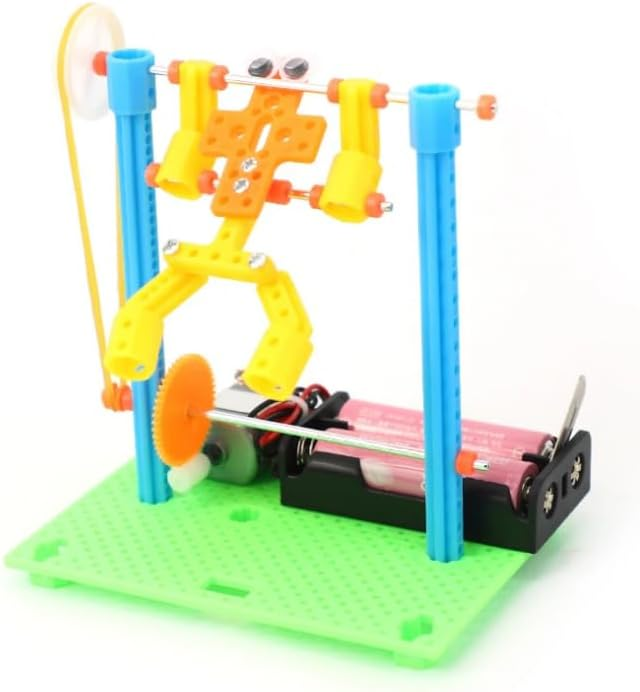
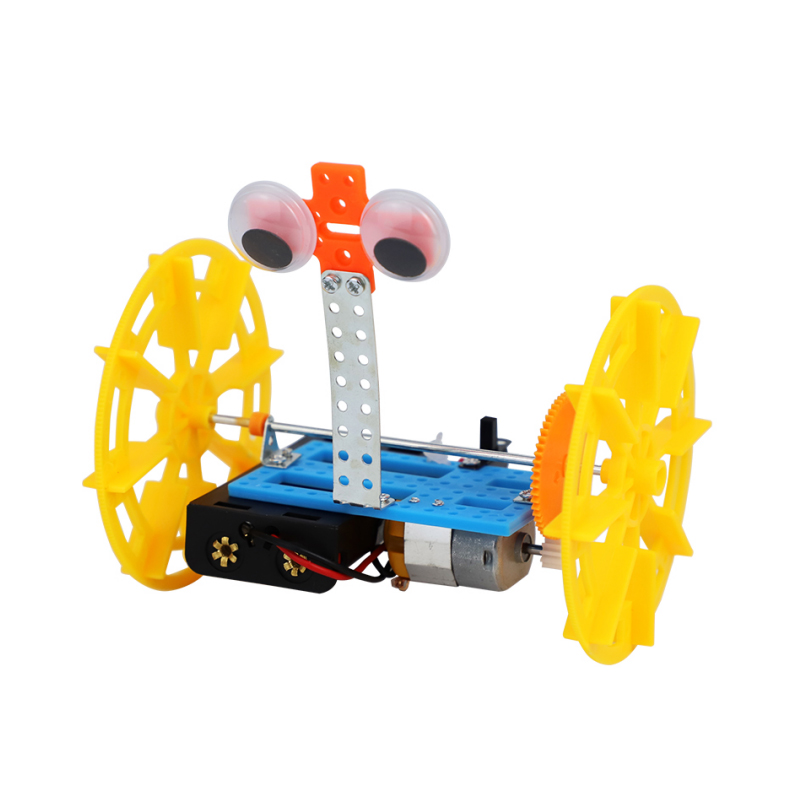
This Educational STEM Horizontal Bar Robot Kit is a build-it-yourself mechanical learning toy designed to demonstrate how a small DC motor can drive a gear-and-belt transmission to produce a repeating climbing/swinging motion on a horizontal bar. The assembled model resembles a mini “gymnast” robot that moves along the top bar using rotating joints and a simple linkage structure. It’s an excellent entry-level project for kids and beginners to explore practical engineering concepts such as motion conversion, torque vs. speed, friction, alignment, and the importance of stable mechanical frames.
The kit is intended as an educational assembly experience rather than a pre-built toy. Learners will practice identifying parts, following an assembly sequence, tightening fasteners, routing wires, and tuning mechanical elements (especially belt tension and gear mesh). Small adjustments during assembly can significantly affect performance, making it a great platform for experimentation and iterative improvement.
Technical Details
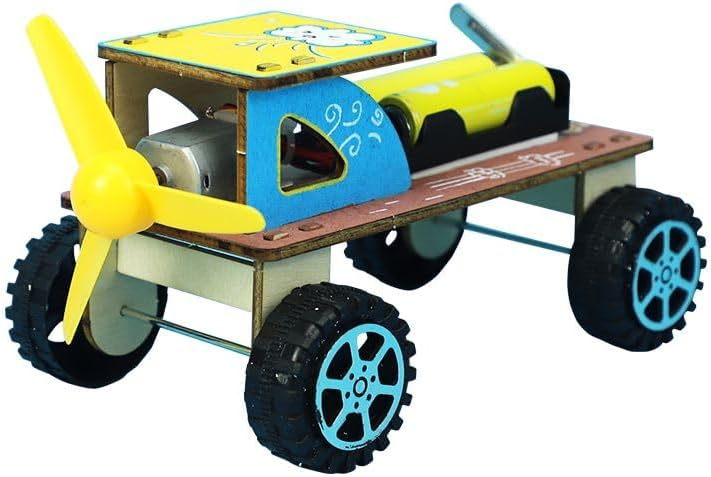
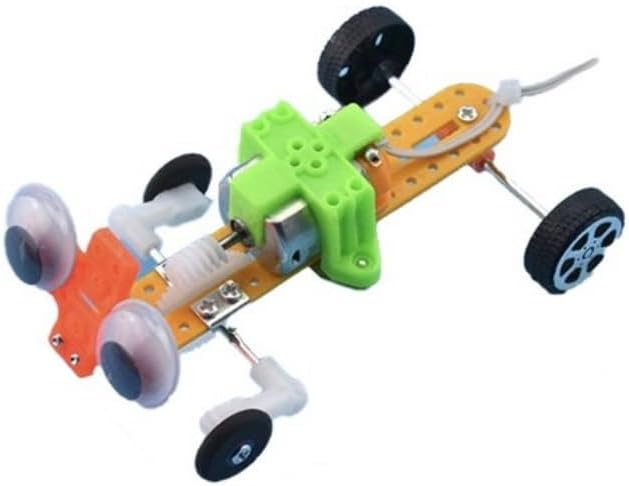
The motion system is based on a compact brushed DC motor powered by a battery holder. The motor shaft drives a plastic gear, which in turn drives a belt/pulley arrangement (exact gear ratio and pulley dimensions vary by module revision). This transmission increases usable torque at the moving mechanism so the robot can repeatedly lift and reposition itself on the horizontal bar. The “arms” and body are formed from lightweight plastic structural pieces connected by screws and spacers, creating a simple linkage that alternates grip/rotation around the bar.
Because this is a mechanical learning kit, performance depends on assembly quality:
- Gear mesh: If gears are too tight, friction increases and the motor may stall; too loose can cause skipping.
- Belt tension: A belt that is too loose may slip; too tight can overload the motor and increase bearing friction.
- Frame squareness: Upright columns and the top bar should be parallel and rigid to avoid binding during motion.
- Electrical contact: Battery spring contacts and motor leads must be secure; weak contact can cause intermittent operation.
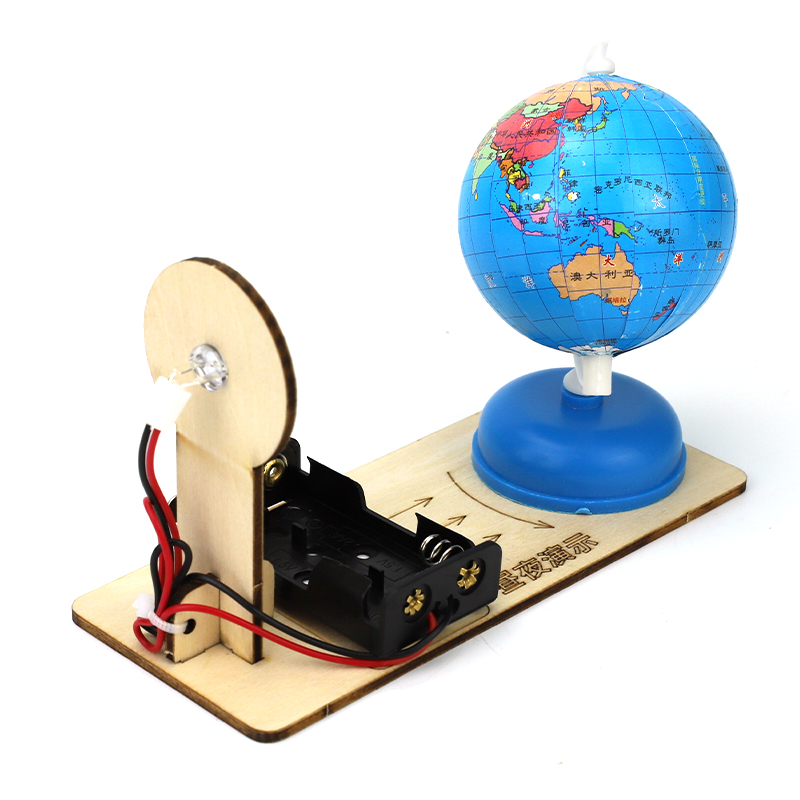
The baseplate provides a stable platform and typically includes multiple holes for mounting the uprights and battery holder. The kit shown uses a two-cell battery holder (commonly AA size), but battery type and holder configuration can vary by kit revision—check the included holder markings and the seller’s pack contents.
Specifications
- Product type: DIY educational mechanical robot kit (horizontal bar/climbing game model)
- Drive motor: Brushed DC motor (exact rated voltage varies by module revision; commonly used with low-voltage battery packs)
- Power source: Battery holder included (cell size/count varies by kit revision; verify holder labeling before use)
- Transmission: Plastic gear + belt/pulley drive (gear ratio and belt length vary by kit revision)
- Structure: Injection-molded plastic parts with metal fasteners and shafts/rods (exact materials and dimensions vary)
- Assembly level: User-assembled; requires basic hand assembly and alignment
- Operating mode: On/off battery-powered continuous motion (control method varies by kit revision; may be direct switch or inline wiring)
- Recommended environment: Indoor, flat surface; keep away from dust/sand that can increase friction in gears
Applications
- STEM education demonstrations: gears, pulleys, torque, friction, and mechanical advantage
- Classroom maker projects and science fairs: explain motion transmission and iterative design
- Parent-child learning activity: build, test, troubleshoot, and optimize performance
- Intro to robotics concepts: actuators (DC motor), power, mechanical linkages, and structural stability
- DIY experimentation: modify gear ratios (if compatible), adjust arm geometry, or add simple switches (revision-dependent)
Integration Notes
- Power and safety: Use only the battery configuration intended for the included motor and holder. If motor voltage is not specified, start with the included battery count and do not exceed it. Supervise children during assembly and operation.
- Mechanical tuning: Ensure the top bar is straight and firmly seated. Re-check screw tightness after initial run-in, as plastic parts can settle.
- Troubleshooting: If motion is weak or stalls, check battery freshness, contact pressure, gear alignment, and belt tension. Reduce friction by ensuring rotating parts are not over-tightened.
- Compatibility: This is a standalone mechanical kit and does not require Arduino/Raspberry Pi. Advanced users may add external control modules, but that requires additional parts and electrical knowledge (not included).
Included Components
1x DIY horizontal bar robot kit set with motor & battery holder