
Raspberry Pi Pico RP2040 Microcontroller Development Board with Dual-Core ARM Cortex-M0+, Micro-USB, 26 GPIO, PIO, ADC, SPI I2C UART, Breadboard-Friendly
plus AED 20 delivery · free over AED 100
- UAE-wide delivery, 1–2 working days once dispatched · AED 20 · free on orders AED 100+
- Out of stock — leave your email above and we tell you when it is back
- 7-day returns on unopened items
- SKU
- Raspberry Pi Pico
- Category
- Raspberry Pi
- Min. order
- 1 pc
- Barcode
- DKU-000020
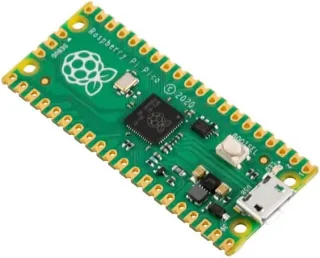
Overview This RP2040-based microcontroller development board is designed for embedded control, rapid prototyping, and education. It combines a compact, breadboard-friendly form factor with a powerful dual-core MCU and flexible I/O, making it suitable for everything from simple GPIO projects to timing-critical interfaces.
Read the full description ↓1x RP2040 Microcontroller Board (Pico form factor)
Description
Overview
This RP2040-based microcontroller development board is designed for embedded control, rapid prototyping, and education. It combines a compact, breadboard-friendly form factor with a powerful dual-core MCU and flexible I/O, making it suitable for everything from simple GPIO projects to timing-critical interfaces. The board includes a Micro-USB connector for power and USB device functionality, and it supports convenient UF2 bootloader-based programming for quick firmware updates.
Technical Details
At the core is the RP2040 microcontroller, featuring dual ARM Cortex‑M0+ cores intended for deterministic real-time workloads. The board exposes a wide set of GPIO pins via castellated edges, allowing direct soldering to carrier PCBs or use with pin headers (if installed). For advanced I/O tasks, RP2040 includes Programmable I/O (PIO) hardware that can generate or capture custom digital waveforms with precise timing, reducing CPU load compared to software bit-banging. This is especially useful for non-standard serial protocols, LED driving, high-speed sampling triggers, or tight-tolerance pulse generation.
The board provides common peripheral interfaces typically required in DIY and product prototyping: SPI for fast displays and ADC/DAC peripherals, I2C for sensors and expanders, UART for serial modules, and PWM for dimming and motor/servo control. Analog capability is available through the MCU’s ADC inputs (exact channel count and mapping should be verified in the RP2040 and board pinout documentation). Power is typically supplied via USB, with on-board regulation to the 3.3V logic domain; exact regulator characteristics and current limits can vary by module revision and should be checked against the official datasheet and schematic.
Specifications
- Microcontroller: RP2040 (dual-core ARM Cortex‑M0+)
- Board type: Microcontroller development board, castellated module
- USB: Micro-USB connector; USB device functionality (USB host support depends on external circuitry and firmware)
- Logic level: 3.3V I/O (5V tolerance varies by pin/function; check datasheet)
- GPIO: 26 multi-function GPIO (as commonly provided on this board family; confirm with pinout)
- Programmable I/O: PIO hardware present (state machine count and capabilities per RP2040 datasheet)
- Interfaces: SPI, I2C, UART, PWM (availability depends on pin muxing; check pinout)
- Analog: ADC inputs available (exact number and pins vary by design/pinout; check datasheet)
- Power input: via Micro-USB (additional power pins may be available; verify board documentation)
- Form factor: Breadboard-friendly width with castellated edges (exact dimensions vary by revision; check datasheet)
Applications
- Sensor hubs and data loggers (I2C/SPI sensors, RTC modules, storage interfaces)
- Robotics and motion projects (PWM for servos/ESCs, GPIO for encoders and limit switches)
- LED and lighting control (addressable LEDs via PIO, PWM dimming, custom timing)
- USB gadgets and HID devices (keypads, controllers, test tools; firmware dependent)
- Educational labs for embedded C/C++ and MicroPython/CircuitPython-style workflows (support varies by toolchain)
Integration Notes
Use 3.3V logic peripherals or level shifting when interfacing with 5V systems. Confirm pin assignments for ADC, I2C, SPI, UART, and PWM in the official pinout before wiring. For power budgeting, account for external loads (servos, LEDs, radios) separately and avoid drawing high current from the board regulator unless the regulator rating is confirmed for your specific revision. If adding headers, ensure correct alignment for breadboards and consider strain relief for frequent USB insertion.
Included Components
1x RP2040 Microcontroller Board (Pico form factor)
Specifications
No reviews yet · be the first
Sign in to review a product you have bought - or use the review link in your order email, which needs no account and marks your review as a verified purchase.
Related components
%22%2F%3E%3Cellipse%20cx%3D%2228%22%20cy%3D%2224%22%20rx%3D%2226%22%20ry%3D%2214%22%20fill%3D%22rgba(255%2C255%2C255%2C.18)%22%2F%3E%3Crect%20x%3D%2222%22%20y%3D%2228%22%20width%3D%2256%22%20height%3D%2250%22%20rx%3D%2212%22%20fill%3D%22url(%23b)%22%20filter%3D%22url(%23s)%22%2F%3E%3Cellipse%20cx%3D%2234%22%20cy%3D%2236%22%20rx%3D%2212%22%20ry%3D%226%22%20fill%3D%22rgba(255%2C255%2C255%2C.28)%22%20transform%3D%22rotate(-18%2034%2036)%22%2F%3E%3Crect%20x%3D%2234%22%20y%3D%2215%22%20width%3D%225%22%20height%3D%2214%22%20rx%3D%222.5%22%20fill%3D%22%236ee7b7%22%2F%3E%3Crect%20x%3D%2261%22%20y%3D%2215%22%20width%3D%225%22%20height%3D%2214%22%20rx%3D%222.5%22%20fill%3D%22%236ee7b7%22%2F%3E%3Ccircle%20cx%3D%2236.5%22%20cy%3D%2214%22%20r%3D%224%22%20fill%3D%22%23a7f3d0%22%2F%3E%3Ccircle%20cx%3D%2263.5%22%20cy%3D%2214%22%20r%3D%224%22%20fill%3D%22%23a7f3d0%22%2F%3E%3Crect%20x%3D%2228%22%20y%3D%2242%22%20width%3D%2244%22%20height%3D%2222%22%20rx%3D%226%22%20fill%3D%22%23022c22%22%2F%3E%3Cline%20x1%3D%2228%22%20y1%3D%2250%22%20x2%3D%2272%22%20y2%3D%2250%22%20stroke%3D%22%2334d399%22%20stroke-width%3D%22.8%22%20stroke-opacity%3D%22.5%22%2F%3E%3Cline%20x1%3D%2228%22%20y1%3D%2257%22%20x2%3D%2272%22%20y2%3D%2257%22%20stroke%3D%22%2334d399%22%20stroke-width%3D%22.8%22%20stroke-opacity%3D%22.5%22%2F%3E%3Cline%20x1%3D%2244%22%20y1%3D%2242%22%20x2%3D%2244%22%20y2%3D%2264%22%20stroke%3D%22%2334d399%22%20stroke-width%3D%22.8%22%20stroke-opacity%3D%22.5%22%2F%3E%3Cline%20x1%3D%2256%22%20y1%3D%2242%22%20x2%3D%2256%22%20y2%3D%2264%22%20stroke%3D%22%2334d399%22%20stroke-width%3D%22.8%22%20stroke-opacity%3D%22.5%22%2F%3E%3Ccircle%20cx%3D%2238%22%20cy%3D%2252%22%20r%3D%226%22%20fill%3D%22%2334d399%22%20opacity%3D%22.9%22%2F%3E%3Ccircle%20cx%3D%2262%22%20cy%3D%2252%22%20r%3D%226%22%20fill%3D%22%2334d399%22%20opacity%3D%22.9%22%2F%3E%3Ccircle%20cx%3D%2236.5%22%20cy%3D%2250.5%22%20r%3D%222%22%20fill%3D%22white%22%2F%3E%3Ccircle%20cx%3D%2260.5%22%20cy%3D%2250.5%22%20r%3D%222%22%20fill%3D%22white%22%2F%3E%3Cpath%20d%3D%22M36%2068%20Q50%2076%2064%2068%22%20fill%3D%22none%22%20stroke%3D%22%23022c22%22%20stroke-width%3D%222.5%22%20stroke-linecap%3D%22round%22%2F%3E%3C%2Fsvg%3E)