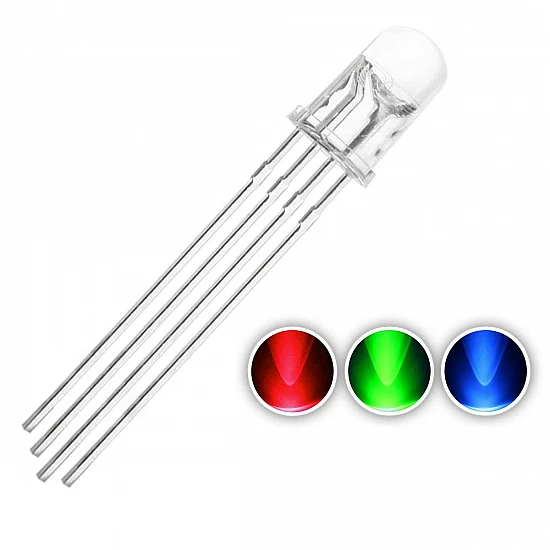
RGB LED 5mm 4-Pin Common Anode Diode - Full Color Diffusion Lens Multi-Pack for Arduino & Raspberry Pi DIY Projects
Overview Bring vibrant illumination and dynamic visual effects to your next electronics creation with the RGB LED 5mm 4-Pin Common Anode Diode Full Color Diffusion Lens Multi-Pack.
- 5mm 4-pin RGB LEDs (quantity varies by pack)
Overview
Bring vibrant illumination and dynamic visual effects to your next electronics creation with the RGB LED 5mm 4-Pin Common Anode Diode
- Full Color Diffusion Lens Multi-Pack. Designed for hobbyists, makers, and engineering students alike, this versatile component packs three distinct primary color emitters—red, green, and blue—into a single compact 5mm package. By independently adjusting the brightness of each internal diode using pulse width modulation, you can easily blend an infinite spectrum of rich, custom colors. Whether you are building an interactive ambient mood lamp, a multi-status indicator panel, or learning the fundamentals of color theory through hardware programming, this standard through-hole component provides a reliable and engaging solution. Its classic form factor ensures compatibility with a vast array of prototyping setups, making it an indispensable addition to any DIY electronics workbench.
Technical Details
At the core of this component is a robust semiconductor architecture housing three independent light-emitting chips beneath a specialized diffused lens. The 4-pin design typically features one common lead paired with three separate anode or cathode pins dedicated to the red, green, and blue channels. Driving these channels requires external current-limiting resistors for each active color pin to prevent overcurrent damage and ensure optimal operational lifespan. When integrated with development boards such as Arduino or Raspberry Pi, engineers can utilize analog output pins or software PWM libraries to dynamically scale voltage levels. This precise analog control allows for smooth, flicker-free transitions between hues, letting you generate custom lighting profiles and animations directly from your code.
Specifications
The component features a standard 5mm package size with a diffused circular lens maximizing light distribution across a wide viewing angle. Forward voltage characteristics vary by color channel, with red typically requiring lower voltage thresholds compared to the higher forward voltage drops inherent to green and blue emitters. Standard continuous forward current ratings apply per channel as per typical semiconductor guidelines. The through-hole lead spacing is designed for standard breadboard insertion, simplifying physical prototyping without requiring specialized surface-mount tools. Operating temperature ranges conform to standard commercial electronics specifications, ensuring stable performance across typical indoor environments.
Applications
This RGB LED is exceptionally well-suited for a wide array of DIY projects, educational STEM kits, and prototype development. Common applications include smart home ambient lighting fixtures, custom computer case modding backlights, multi-state system notification indicators, and wearable tech projects. It serves as an ideal teaching aid in classrooms for demonstrating PWM signal generation, digital-to-analog conversion concepts, and RGB color space theory. Makers also frequently incorporate these diodes into robotics chassis for decorative accent lighting or interactive status feedback displays.
Integration Notes
Proper integration requires careful attention to pin configuration, specifically identifying whether your specific batch utilizes a common-anode or common-cathode internal layout. Always calculate and install appropriate current-limiting resistors in series with each color pin based on your supply voltage to protect the internal emitters from excessive current draw. When writing software control loops, ensure your PWM frequency is high enough to eliminate visible flickering to the human eye. Refer to standard electronics datasheets for exact electrical characteristics when pairing these components with high-voltage or battery-powered circuits.
Included Components
- 5mm 4-pin RGB LEDs (quantity varies by pack)
No reviews for this component yet.
Related Components
 In Stock