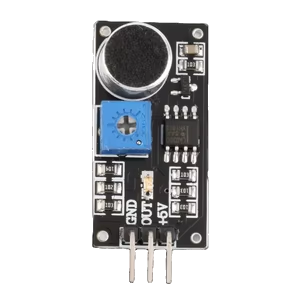
Sound Detection Sensor Module LM393 - Electret Microphone, DC 4V-6V Operating Voltage, Digital Output for Arduino and Raspberry Pi Voice Control DIY Projects
Overview The Sound Detection Sensor Module LM393 is a versatile audio sensing device engineered for hobbyists, engineers, and DIY electronics makers. Designed around a reliable electret condenser microphone and an LM393 dual differential comparator, this module efficiently converts ambient acoustic waves into electrical signals.
1 x Sound Detection Sensor Module LM393 with electret microphone
Overview
The Sound Detection Sensor Module LM393 is a versatile audio sensing device engineered for hobbyists, engineers, and DIY electronics makers. Designed around a reliable electret condenser microphone and an LM393 dual differential comparator, this module efficiently converts ambient acoustic waves into electrical signals. Whether you are building an interactive robotics project, an automated voice-activated lighting system, or a security alarm, this sensor provides a dependable digital switching interface that seamlessly connects to microcontroller development boards. Its straightforward integration and adjustable threshold make it an essential component for any acoustic-sensing application.
Technical Details
At the heart of the module is an electret microphone that captures sound waves and translates them into analog voltage fluctuations. These fluctuations are routed into the LM393 comparator, which compares the microphone signal against a reference voltage set by the onboard potentiometer. When ambient sound exceeds the pre-set threshold, the comparator triggers a state change, pulling the digital output pin to a low level while simultaneously illuminating an onboard signal indicator LED. This provides instant visual feedback alongside the hardware logic output, simplifying debugging and deployment during your prototyping phase.
Specifications
The module operates on a direct current input voltage ranging between 4V and 6V, ensuring wide compatibility with standard 5V development boards such as Arduino Uno and Mega, as well as level-shifted 3.3V systems. The physical printed circuit board measures 32 millimeters in length, 17 millimeters in width, and stands approximately 15 millimeters high including the microphone and pin headers. The output format is a single-channel digital switching value, meaning it indicates the presence or absence of sound past a threshold rather than streaming raw audio data. Operating parameters and exact frequency response curves may vary depending on specific module revisions and environmental ambient conditions.
Applications
This sound sensor module opens up a wide array of creative and practical use cases across home automation, robotics, and security systems. It is frequently deployed in voice-activated lighting circuits where clapping or speaking turns lights on or off. Makers also use it to create sound and light alarms when paired with photosensitive sensors and buzzers. Other popular applications include acoustic noise detectors, clap-activated switches, voice-controlled robotic platforms, and educational STEM kits designed to teach microcontrollers how to interact with the physical audio environment.
Integration Notes
Integrating the Sound Detection Sensor Module into your circuit is straightforward. Connect the VCC pin to your power supply (DC 4V to 6V) and the GND pin to system ground. The OUT pin connects to any available digital input pin on your microcontroller. To adjust sensitivity, use a small screwdriver to turn the onboard potentiometer screw clockwise or counterclockwise until the module triggers precisely at your desired noise level. Ensure proper placement away from high-vibrations or direct airflow to minimize false triggers in sensitive setups.
Included Components
1 x Sound Detection Sensor Module LM393 with electret microphone
No reviews for this component yet.
Related Components

 In Stock