 Backorder
Some images are AI-generated illustrations, made to match this kit’s actual contents. Colours and small details may differ — see “In the box” and the product details for the exact parts.
DIY Fiber Optic Light Physics Experiment Kit, Electronic Educational Science Model Toy with Baseboard & Battery Holder, Optical Transmission Demonstration, 17 cm x 9 cm
plus AED 20 delivery · free over AED 100
- UAE-wide delivery, 1–2 working days once dispatched · AED 20 · free on orders AED 100+
- Backorder — ordered in for you, ships when it arrives
- 7-day returns on unopened items
- SKU
- DIY-00051
- Category
- DIY KITS
- Min. order
- 1 pc
- Barcode
- DKU-000088
Overview This DIY science kit is a compact fiber optic light physics experiment model designed to demonstrate how light can be guided through optical fibers.
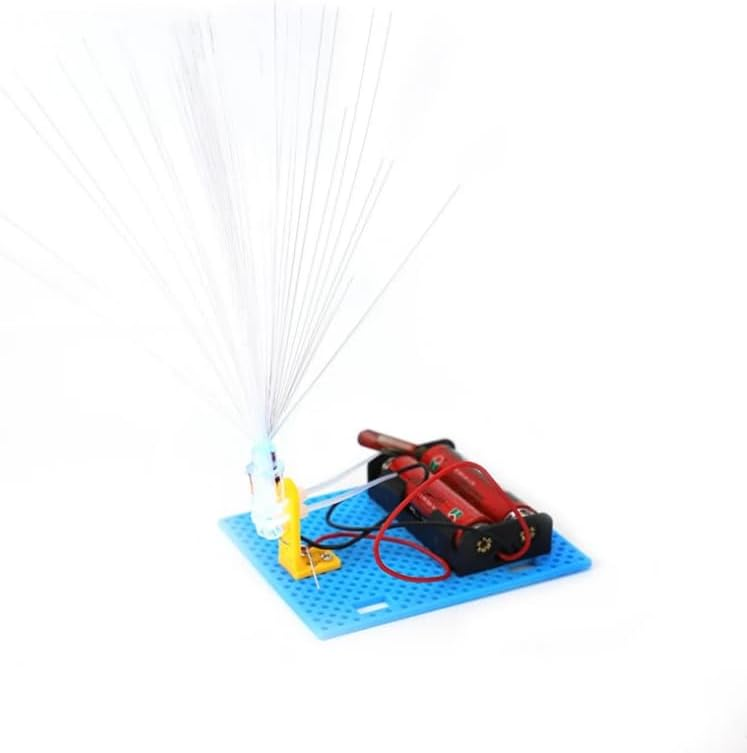
Read the full description ↓Fiber optic light experiment kit components (as pictured)
Description
Overview
This DIY science kit is a compact fiber optic light physics experiment model designed to demonstrate how light can be guided through optical fibers. By coupling a light source into a fiber bundle, the kit produces a visible output pattern at the fiber ends, making it easier to explain core optics concepts such as total internal reflection, light coupling efficiency, and transmission loss. The included baseboard format keeps the build stable and portable, while still allowing learners to move components and observe how alignment and bending affect brightness.
Technical Details
The experiment works by injecting light from a small lamp/LED module into the input end of a fiber optic bundle. When light enters the fiber at an appropriate angle (within the acceptance cone defined by the fiber’s numerical aperture, which varies by fiber type), it is guided along the fiber by total internal reflection at the core/cladding boundary. As the fiber is bent, micro-bending and macro-bending losses can increase, reducing the output intensity—an easy, visual way to teach attenuation mechanisms.
Because coupling is alignment-sensitive, students can observe how distance, angle, and centering between the light source and fiber input impact brightness. This directly relates to real optical systems where connectors, polishing quality, and alignment tolerances affect insertion loss. The kit’s low-voltage wiring also supports basic electronics learning: identifying polarity (if LED-based), checking continuity, and understanding simple power paths from the battery holder to the light source.
Specifications
- Product type: DIY fiber optic light physics experiment model / educational electronic toy
- Overall size: 17 cm x 9 cm (as provided)
- Light transmission medium: Fiber optic bundle (material and diameter vary by module revision; check datasheet/pack contents)
- Light source: Small lamp/LED module (type, color temperature/wavelength, and power vary by module revision)
- Power: Battery-powered via holder (battery size/count vary by module revision; batteries typically not included unless stated by seller)
- Base: Perforated mounting board for component placement and wire routing
- Output: Visible light at fiber ends; brightness depends on ambient light, battery condition, and coupling alignment
- Assembly level: Beginner-friendly DIY assembly (tools required may vary; small screwdriver/cutters may be helpful)
Applications
- Physics demonstrations: total internal reflection, waveguiding, attenuation, coupling and alignment effects
- Classroom STEM activities: optics lessons, lab stations, group experiments
- Science fairs: visual display model for optical communication principles
- DIY electronics practice: simple power wiring, troubleshooting, and safe low-voltage experimentation
- Maker education: introducing optical concepts alongside basic circuit building
Integration Notes
- For best results, perform the demo in moderate or low ambient light to make the fiber output more visible.
- Avoid sharp bends or kinks in the fiber bundle; tighter bend radius increases loss and can permanently damage some fibers.
- If the light source is LED-based, confirm polarity and secure connections; intermittent wiring can cause flicker.
- Battery voltage and capacity affect brightness; replace or recharge batteries when output becomes dim.
- Component types may vary by production batch; verify included parts and wiring layout before assembly.
Included Components
Fiber optic light experiment kit components (as pictured)
Specifications
No reviews yet · be the first
Sign in to review a product you have bought - or use the review link in your order email, which needs no account and marks your review as a verified purchase.
Related components
%22%2F%3E%3Cellipse%20cx%3D%2228%22%20cy%3D%2224%22%20rx%3D%2226%22%20ry%3D%2214%22%20fill%3D%22rgba(255%2C255%2C255%2C.18)%22%2F%3E%3Crect%20x%3D%2222%22%20y%3D%2228%22%20width%3D%2256%22%20height%3D%2250%22%20rx%3D%2212%22%20fill%3D%22url(%23b)%22%20filter%3D%22url(%23s)%22%2F%3E%3Cellipse%20cx%3D%2234%22%20cy%3D%2236%22%20rx%3D%2212%22%20ry%3D%226%22%20fill%3D%22rgba(255%2C255%2C255%2C.28)%22%20transform%3D%22rotate(-18%2034%2036)%22%2F%3E%3Crect%20x%3D%2234%22%20y%3D%2215%22%20width%3D%225%22%20height%3D%2214%22%20rx%3D%222.5%22%20fill%3D%22%236ee7b7%22%2F%3E%3Crect%20x%3D%2261%22%20y%3D%2215%22%20width%3D%225%22%20height%3D%2214%22%20rx%3D%222.5%22%20fill%3D%22%236ee7b7%22%2F%3E%3Ccircle%20cx%3D%2236.5%22%20cy%3D%2214%22%20r%3D%224%22%20fill%3D%22%23a7f3d0%22%2F%3E%3Ccircle%20cx%3D%2263.5%22%20cy%3D%2214%22%20r%3D%224%22%20fill%3D%22%23a7f3d0%22%2F%3E%3Crect%20x%3D%2228%22%20y%3D%2242%22%20width%3D%2244%22%20height%3D%2222%22%20rx%3D%226%22%20fill%3D%22%23022c22%22%2F%3E%3Cline%20x1%3D%2228%22%20y1%3D%2250%22%20x2%3D%2272%22%20y2%3D%2250%22%20stroke%3D%22%2334d399%22%20stroke-width%3D%22.8%22%20stroke-opacity%3D%22.5%22%2F%3E%3Cline%20x1%3D%2228%22%20y1%3D%2257%22%20x2%3D%2272%22%20y2%3D%2257%22%20stroke%3D%22%2334d399%22%20stroke-width%3D%22.8%22%20stroke-opacity%3D%22.5%22%2F%3E%3Cline%20x1%3D%2244%22%20y1%3D%2242%22%20x2%3D%2244%22%20y2%3D%2264%22%20stroke%3D%22%2334d399%22%20stroke-width%3D%22.8%22%20stroke-opacity%3D%22.5%22%2F%3E%3Cline%20x1%3D%2256%22%20y1%3D%2242%22%20x2%3D%2256%22%20y2%3D%2264%22%20stroke%3D%22%2334d399%22%20stroke-width%3D%22.8%22%20stroke-opacity%3D%22.5%22%2F%3E%3Ccircle%20cx%3D%2238%22%20cy%3D%2252%22%20r%3D%226%22%20fill%3D%22%2334d399%22%20opacity%3D%22.9%22%2F%3E%3Ccircle%20cx%3D%2262%22%20cy%3D%2252%22%20r%3D%226%22%20fill%3D%22%2334d399%22%20opacity%3D%22.9%22%2F%3E%3Ccircle%20cx%3D%2236.5%22%20cy%3D%2250.5%22%20r%3D%222%22%20fill%3D%22white%22%2F%3E%3Ccircle%20cx%3D%2260.5%22%20cy%3D%2250.5%22%20r%3D%222%22%20fill%3D%22white%22%2F%3E%3Cpath%20d%3D%22M36%2068%20Q50%2076%2064%2068%22%20fill%3D%22none%22%20stroke%3D%22%23022c22%22%20stroke-width%3D%222.5%22%20stroke-linecap%3D%22round%22%2F%3E%3C%2Fsvg%3E)