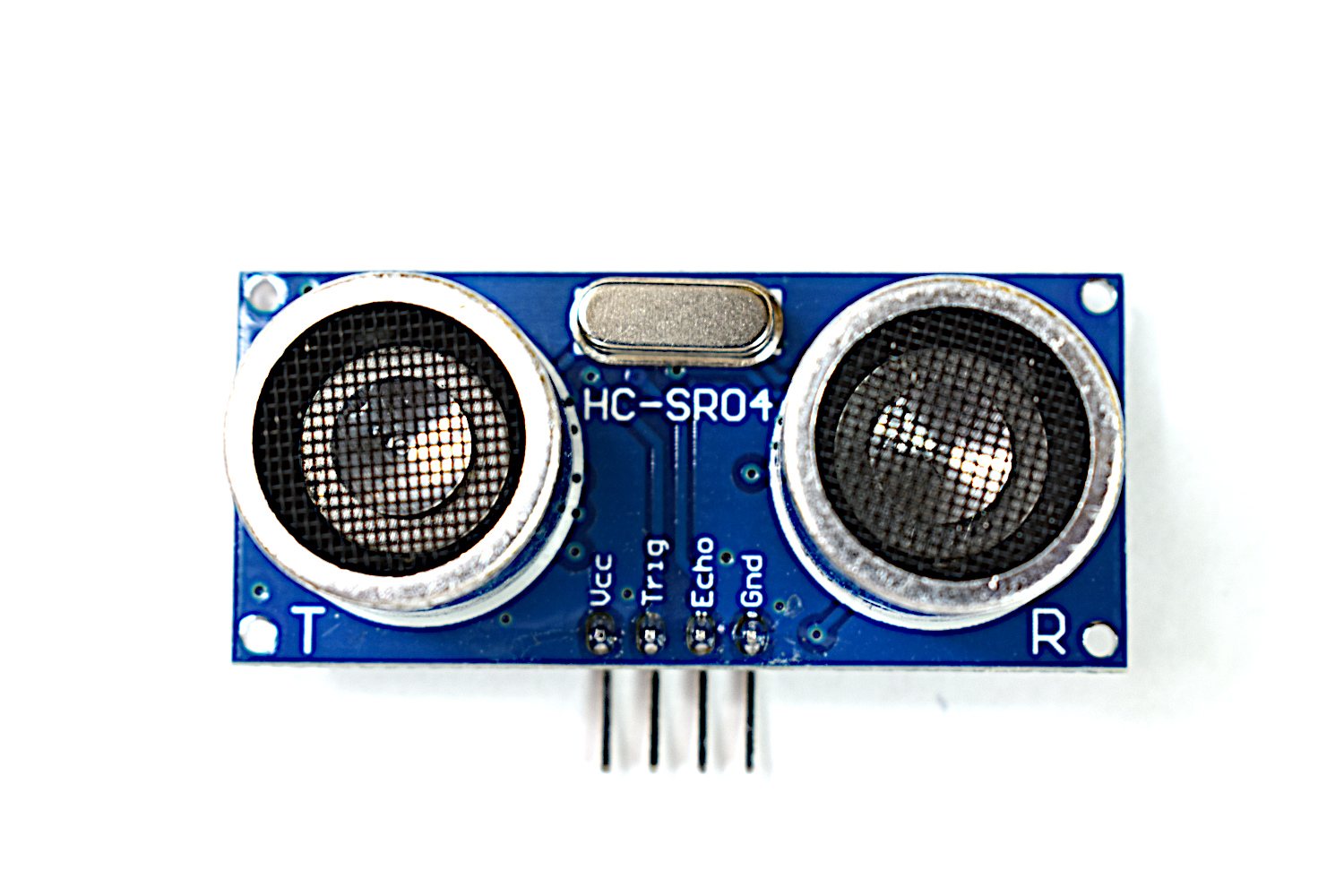
HC-SR04 Ultrasonic Distance Sensor Module for Arduino, Raspberry Pi & DIY Robotics Projects, 5V Trigger/Echo Interface, Non-Contact Range Measurement, Breadboard Friendly Pins
plus AED 20 delivery · free over AED 100
- UAE-wide delivery, 1–2 working days · AED 20 · free on orders AED 100+
- Ships today — order by 3pm
- 7-day returns on unopened items
- SKU
- DIY-00043
- Category
- Sensors
- Min. order
- 1 pc
- Barcode
- DKU-000080
Overview The HC-SR04 (often written HCSR04) is a widely used ultrasonic distance sensor module designed for quick, non-contact distance measurement in electronics and DIY automation projects. It works by emitting an ultrasonic burst through its transmitter transducer and listening for the reflected echo on the receiver transducer.
Read the full description ↓Complete the build
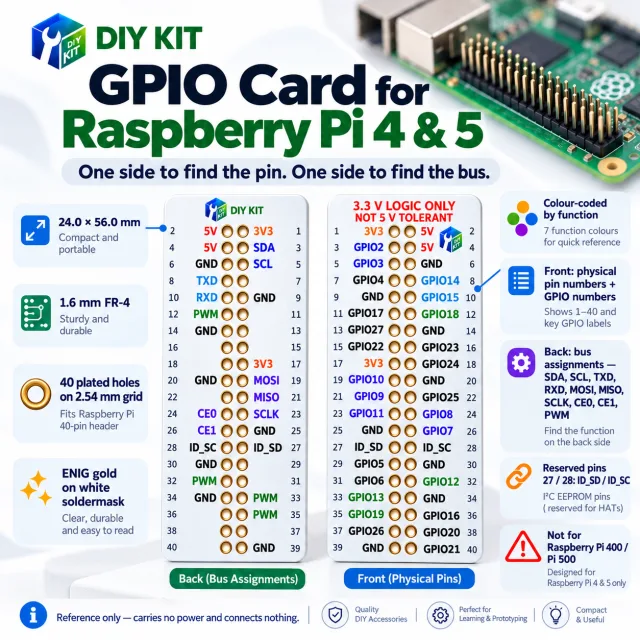
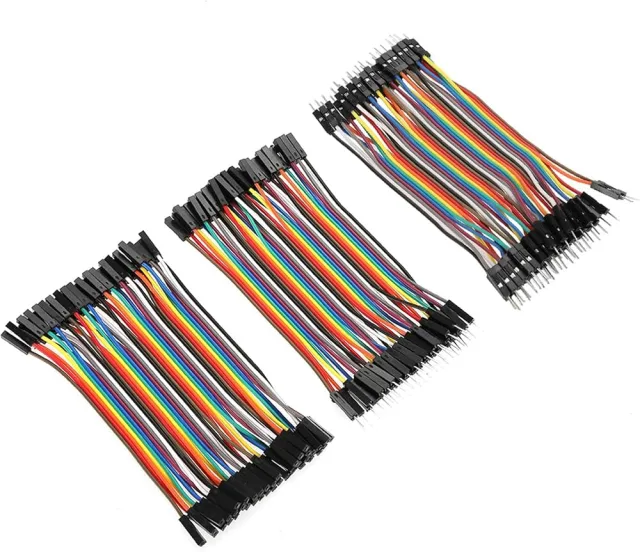
Our own DIYKIT board was made for this — plus what it is usually wired or ordered with.

Used in these kits and projects
- Lesson 4: Ultrasonic Distance Beginner
- Lesson 7: Parking Assistant & Sensor Dashboard Beginner
- Lesson 1: Measure Distance with Sound Beginner
- Lesson 2: Traffic-Light Distance Indicator Beginner
- Lesson 3: Parking Beeper Beginner
- Lesson 4: Blind Zone & No Echo Beginner
and 5 more — open the kit to see them all.
HC-SR04 ultrasonic distance sensor module x1
Description
Overview
The HC-SR04 (often written HCSR04) is a widely used ultrasonic distance sensor module designed for quick, non-contact distance measurement in electronics and DIY automation projects. It works by emitting an ultrasonic burst through its transmitter transducer and listening for the reflected echo on the receiver transducer. By measuring the time-of-flight of the sound wave, your controller can estimate the distance to an object in front of the sensor. This makes the module a popular choice for entry-level robotics, obstacle avoidance, proximity sensing, and simple level/distance monitoring where optical sensors may struggle due to lighting conditions.
Technical Details
The module typically operates by sending a short trigger pulse to the TRIG pin. After receiving the trigger, the onboard controller drives the ultrasonic transmitter at approximately 40 kHz for a brief burst. The module then sets the ECHO pin high and keeps it high until the reflected signal is detected (or until an internal timeout occurs). Your microcontroller measures the width of the ECHO pulse; this pulse width corresponds to the round-trip travel time of the ultrasonic wave. Distance is then calculated using the speed of sound in air, which varies with temperature, humidity, and air pressure. For best accuracy, compensate for ambient temperature when possible, and ensure the target surface is reasonably reflective to ultrasound (flat, solid surfaces generally perform better than soft fabrics or angled surfaces that deflect sound away from the receiver).
Because the HC-SR04 is commonly powered from 5V, the ECHO output is typically a 5V logic-level pulse on many module revisions. When interfacing with 3.3V-only GPIO (for example, many Raspberry Pi and some microcontrollers), use a level shifter or a resistor divider on the ECHO line to protect the input pin. TRIG is an input and is often compatible with 3.3V drive in practice, but behavior can vary by module revision—verify with your specific board and follow the datasheet guidance.
Specifications
- Module type: Ultrasonic distance sensor module (HCSR04 / HC-SR04 form factor)
- Operating principle: Ultrasonic time-of-flight (round-trip) measurement
- Ultrasonic frequency: typically around 40 kHz (varies by module revision)
- Supply voltage: commonly 5V DC (check datasheet/module marking)
- Interface pins: VCC, TRIG, ECHO, GND
- Signal type: TRIG digital input, ECHO digital pulse output (logic level varies by module revision)
- Measurement range: varies by module revision and environment; typical HC-SR04-class modules are used for short-to-medium range sensing (check datasheet)
- Accuracy/repeatability: varies by module revision, target material, alignment, and environmental conditions (temperature/humidity)
- Field of view: varies by module revision and mounting; ultrasonic sensors generally have a cone-shaped detection area
- Mounting: PCB with dual transducers; typically panel/bracket mountable using the board holes (hole spacing varies by revision)
Applications
- Robotics obstacle avoidance and basic navigation
- Proximity detection for interactive projects and automation triggers
- Distance measurement for positioning experiments and DIY measuring tools
- Tank/bin level estimation (with appropriate calibration and mounting)
- Parking aid prototypes and approach warning indicators
- Educational labs for pulse timing, interrupts, and sensor fusion projects
Integration Notes
- Timing measurement: Use pulse-width measurement (polling, interrupts, or hardware timers) to capture ECHO high time accurately.
- Update rate: Allow sufficient time between measurements to avoid false echoes; spacing depends on range and environment (check datasheet and tune in firmware).
- Temperature effects: Speed of sound changes with temperature; for improved accuracy, apply temperature compensation or calibrate in the expected environment.
- Mechanical mounting: Keep the sensor facing the target area, avoid obstructions in front of the transducers, and reduce vibration for stable readings.
- 3.3V systems: Protect 3.3V GPIO from 5V ECHO output using a level shifter/resistor divider; confirm logic levels for your specific module revision.
Included Components
HC-SR04 ultrasonic distance sensor module x1
Specifications
No reviews yet · be the first
Sign in to review a product you have bought - or use the review link in your order email, which needs no account and marks your review as a verified purchase.
Related components
 In Stock
%22%2F%3E%3Cellipse%20cx%3D%2228%22%20cy%3D%2224%22%20rx%3D%2226%22%20ry%3D%2214%22%20fill%3D%22rgba(255%2C255%2C255%2C.18)%22%2F%3E%3Crect%20x%3D%2222%22%20y%3D%2228%22%20width%3D%2256%22%20height%3D%2250%22%20rx%3D%2212%22%20fill%3D%22url(%23b)%22%20filter%3D%22url(%23s)%22%2F%3E%3Cellipse%20cx%3D%2234%22%20cy%3D%2236%22%20rx%3D%2212%22%20ry%3D%226%22%20fill%3D%22rgba(255%2C255%2C255%2C.28)%22%20transform%3D%22rotate(-18%2034%2036)%22%2F%3E%3Crect%20x%3D%2234%22%20y%3D%2215%22%20width%3D%225%22%20height%3D%2214%22%20rx%3D%222.5%22%20fill%3D%22%236ee7b7%22%2F%3E%3Crect%20x%3D%2261%22%20y%3D%2215%22%20width%3D%225%22%20height%3D%2214%22%20rx%3D%222.5%22%20fill%3D%22%236ee7b7%22%2F%3E%3Ccircle%20cx%3D%2236.5%22%20cy%3D%2214%22%20r%3D%224%22%20fill%3D%22%23a7f3d0%22%2F%3E%3Ccircle%20cx%3D%2263.5%22%20cy%3D%2214%22%20r%3D%224%22%20fill%3D%22%23a7f3d0%22%2F%3E%3Crect%20x%3D%2228%22%20y%3D%2242%22%20width%3D%2244%22%20height%3D%2222%22%20rx%3D%226%22%20fill%3D%22%23022c22%22%2F%3E%3Cline%20x1%3D%2228%22%20y1%3D%2250%22%20x2%3D%2272%22%20y2%3D%2250%22%20stroke%3D%22%2334d399%22%20stroke-width%3D%22.8%22%20stroke-opacity%3D%22.5%22%2F%3E%3Cline%20x1%3D%2228%22%20y1%3D%2257%22%20x2%3D%2272%22%20y2%3D%2257%22%20stroke%3D%22%2334d399%22%20stroke-width%3D%22.8%22%20stroke-opacity%3D%22.5%22%2F%3E%3Cline%20x1%3D%2244%22%20y1%3D%2242%22%20x2%3D%2244%22%20y2%3D%2264%22%20stroke%3D%22%2334d399%22%20stroke-width%3D%22.8%22%20stroke-opacity%3D%22.5%22%2F%3E%3Cline%20x1%3D%2256%22%20y1%3D%2242%22%20x2%3D%2256%22%20y2%3D%2264%22%20stroke%3D%22%2334d399%22%20stroke-width%3D%22.8%22%20stroke-opacity%3D%22.5%22%2F%3E%3Ccircle%20cx%3D%2238%22%20cy%3D%2252%22%20r%3D%226%22%20fill%3D%22%2334d399%22%20opacity%3D%22.9%22%2F%3E%3Ccircle%20cx%3D%2262%22%20cy%3D%2252%22%20r%3D%226%22%20fill%3D%22%2334d399%22%20opacity%3D%22.9%22%2F%3E%3Ccircle%20cx%3D%2236.5%22%20cy%3D%2250.5%22%20r%3D%222%22%20fill%3D%22white%22%2F%3E%3Ccircle%20cx%3D%2260.5%22%20cy%3D%2250.5%22%20r%3D%222%22%20fill%3D%22white%22%2F%3E%3Cpath%20d%3D%22M36%2068%20Q50%2076%2064%2068%22%20fill%3D%22none%22%20stroke%3D%22%23022c22%22%20stroke-width%3D%222.5%22%20stroke-linecap%3D%22round%22%2F%3E%3C%2Fsvg%3E)