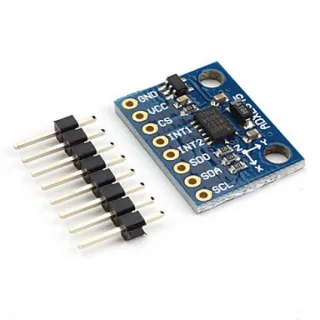
SW-520D Tilt Sensor Module with Adjustable Sensitivity, Angle/Vibration Switch Board for Arduino & DIY Projects
More options
Detect tilt, shake, and vibration in your DIY projects with the SW-520D tilt sensor module. This compact board is built around the SW-520D ball-type angle/vibration switch and is designed for simple motion event detection. It’s a popular choice for makers who need a low-cost way to know when something has moved—such as a robot that tips, a box that gets shaken, a door that vibrates, or a device that changes orientation.
Unlike complex IMU sensors that provide continuous angle data, the SW-520D module acts as a switch-based detector that triggers when motion or tilt crosses a threshold. This makes it perfect for alert systems and simple automation logic. For example, you can trigger a buzzer when a package is disturbed, send an alarm when a cabinet is opened and shaken, stop a robot motor when a chassis tilts too far, or count vibration events during a test. Because the output is digital, your microcontroller reads it as an ON/OFF signal, making the code straightforward and fast.
A key advantage of this module is the adjustable sensitivity. The onboard potentiometer allows you to tune when the sensor triggers, which is useful because vibration levels can differ greatly between projects. You can set it to respond only to stronger movement, or make it more sensitive for lighter vibrations. The onboard status LED gives immediate feedback during testing, helping you confirm trigger behavior without needing to constantly check the serial monitor.
Integration is easy with common development boards. Connect VCC and GND for power, then connect the D0 pin to a digital input on Arduino, ESP32, or other controllers. For Raspberry Pi, you can read D0 using GPIO input (ensure correct voltage compatibility for your board). This module is often used in smart robot builds, DIY alarm systems, vibration monitoring demos, and educational projects that teach digital sensing and threshold detection.
For best results, mount the board securely to the surface you want to monitor. A loosely mounted sensor may trigger inconsistently because the board itself can move. If your project has motors or strong vibrations, route sensor wiring away from motor power lines to reduce electrical noise. Also note that since it is a switch-style sensor, it is intended for event detection (trigger/no trigger) rather than precise measurement of tilt angle.
This SW-520D tilt and vibration module is a simple and effective building block for adding motion awareness to electronics projects. It provides an easy digital trigger with adjustable sensitivity so you can tailor the response to your specific application.
Included Components
1× SW-520D tilt/vibration sensor module

Full description
Detect tilt, shake, and vibration in your DIY projects with the SW-520D tilt sensor module. This compact board is built around the SW-520D ball-type angle/vibration switch and is designed for simple motion event detection. It’s a popular choice for makers who need a low-cost way to know when something has moved—such as a robot that tips, a box that gets shaken, a door that vibrates, or a device that changes orientation.
Unlike complex IMU sensors that provide continuous angle data, the SW-520D module acts as a switch-based detector that triggers when motion or tilt crosses a threshold. This makes it perfect for alert systems and simple automation logic. For example, you can trigger a buzzer when a package is disturbed, send an alarm when a cabinet is opened and shaken, stop a robot motor when a chassis tilts too far, or count vibration events during a test. Because the output is digital, your microcontroller reads it as an ON/OFF signal, making the code straightforward and fast.
A key advantage of this module is the adjustable sensitivity. The onboard potentiometer allows you to tune when the sensor triggers, which is useful because vibration levels can differ greatly between projects. You can set it to respond only to stronger movement, or make it more sensitive for lighter vibrations. The onboard status LED gives immediate feedback during testing, helping you confirm trigger behavior without needing to constantly check the serial monitor.
Integration is easy with common development boards. Connect VCC and GND for power, then connect the D0 pin to a digital input on Arduino, ESP32, or other controllers. For Raspberry Pi, you can read D0 using GPIO input (ensure correct voltage compatibility for your board). This module is often used in smart robot builds, DIY alarm systems, vibration monitoring demos, and educational projects that teach digital sensing and threshold detection.
For best results, mount the board securely to the surface you want to monitor. A loosely mounted sensor may trigger inconsistently because the board itself can move. If your project has motors or strong vibrations, route sensor wiring away from motor power lines to reduce electrical noise. Also note that since it is a switch-style sensor, it is intended for event detection (trigger/no trigger) rather than precise measurement of tilt angle.
This SW-520D tilt and vibration module is a simple and effective building block for adding motion awareness to electronics projects. It provides an easy digital trigger with adjustable sensitivity so you can tailor the response to your specific application.
Included Components
1× SW-520D tilt/vibration sensor module
No reviews yet — be the first.
Honest takes from buyers who built with this part.
Write a review
No questions yet.
Ask anything — the team and other customers will reply.
Ask a question
Starter Bundle Builder
Works With
Find more compatible parts
Related